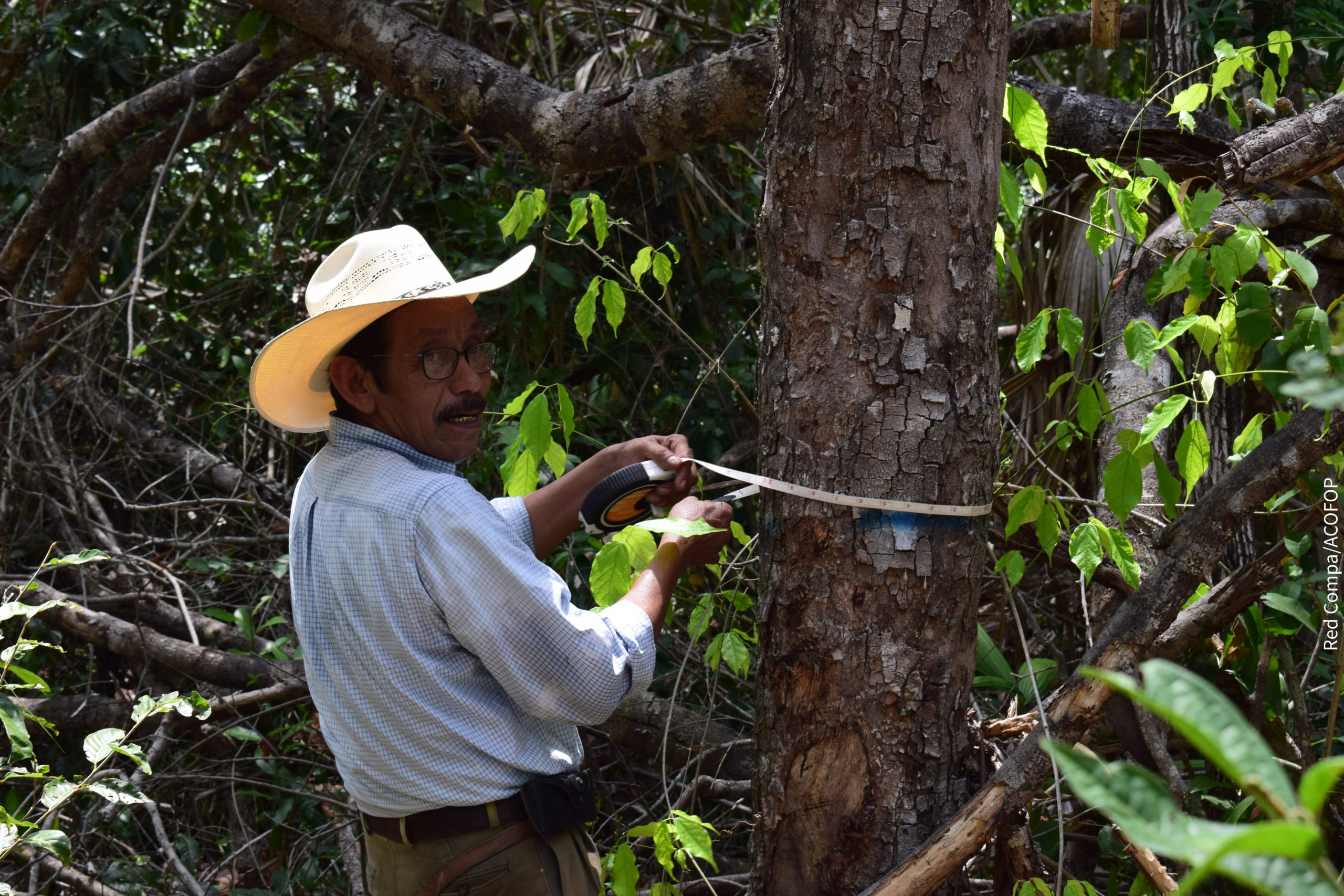
Indigenous peoples and local communities launch Mesoamerican Territorial Fund, a regional financial mechanism, to address inequity in climate finance
Produced in collaboration with Rainforest Foundation US (RFUS).
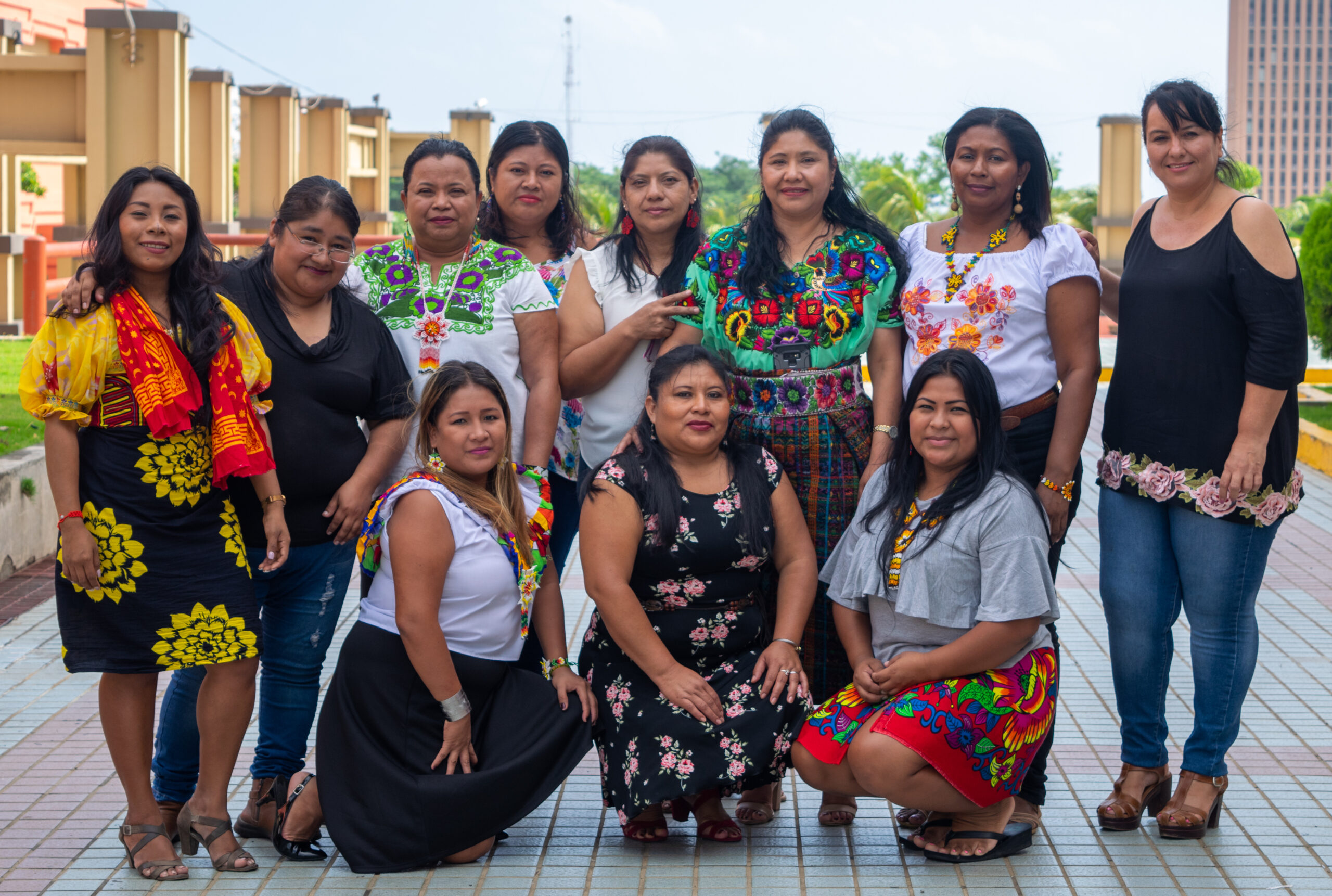
- The Mesoamerican Territorial Fund (FTM) will bring needed resources to indigenous and local rainforest communities from Mexico to Panama.
- There are more than 170,000 square miles of forests in the territories of indigenous peoples in Mesoamerica, an area larger than California.
- The fund could help channel some of the $1.7 billion pledged to communities by major donors in Glasgow in 2021.
- Studies show that indigenous peoples and local communities are extremely effective in defending rainforests, but are severely underfunded.
- The FTM will be ready to receive donations by the end of 2022.
Increasingly, experts agree: indigenous peoples are the best protectors of the world's rainforests. And so, one of the most cost-effective ways to protect the forest is to give resources directly to indigenous communities on the front lines of rainforest destruction.
But it's not as if these towns have Venmo. And even if they did, this is not a problem that can be solved with small grants alone. Indigenous peoples and other vulnerable forest-dependent communities (referred to in the field as "local communities") need substantial investment, from federal governments to international financial institutions like the World Bank. But if these communities do not have traditional avenues for receiving, processing and reporting funds, these major donors will not open their pockets.
Ese es un problema que Gustavo Sánchez, presidente de la junta directiva de la Alianza Mesoamericana de Pueblos y Bosques (AMPB), está tratando de resolver. AMPB trabaja en toda Mesoamérica, un área geográfica que se extiende desde México hasta Panamá, sirviendo como una organización de defensa internacional para las organizaciones de pueblos indígenas y locales lideradas regionalmente contenidas en ella. El año pasado, AMPB y Rainforest Foundation US (RFUS) recibieron conjuntamente una subvención federal de USAID de $2 millones para profundizar el trabajo de AMPB. Entre otras cosas, la donación, que iniciará actividades este año, sentará las bases para el Fondo Territorial Mesoamericano (FTM), que tiene como objetivo canalizar de manera más efectiva importantes apoyos financieros para la protección de la selva a aquellas comunidades que pueden poner para un mejor uso.
Lea más sobre la subvención federal de USAID de AMPB y RFUS aquí.
"We're going to be a bridge," Sanchez explains. "Bridging correctly is important. On the one hand, certain donors have requirements they have to meet before they give. But on the other hand, if the money gets too far away from the communities, then too much gets lost along the way."
A response to climate change
Estudios como este muestran consistentemente que los pueblos indígenas y locales protegen regularmente sus selvas tropicales mejor que todas las demás entidades públicas y privadas, incluidos los servicios de parques nacionales. Con la crisis climática indisolublemente ligada a la deforestación (y las Naciones Unidas pronosticando el colapso ecológico y la devastación de la vida humana a menos que se tomen medidas drásticas), está claro que obtener recursos para los programas de defensa forestal de los pueblos indígenas y las comunidades locales es una estrategia rentable y vital. método para proteger la salud del planeta. Como tal, varios gobiernos federales y los principales financiadores privados en la cumbre climática anual de las Naciones Unidas «COP26» hicieron una promesa de $ 1.7 mil millones para apoyar a las comunidades indígenas y locales para asegurar su tenencia de la tierra. Esos fondos se desembolsarán entre 2021 y 2025, pero los mecanismos a través de los cuales se canalizarán aún no están definidos.
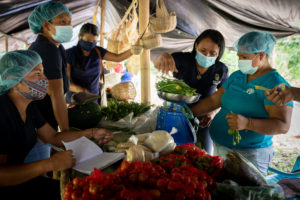
But it remains to be seen how effectively that money will be distributed. A study published earlier this year by our sister organization Rainforest Foundation Norway found that over the past ten years, less than 1 percent of climate change mitigation and adaptation funds have gone to these forest communities, even though they can offer such promising returns on investment.
"We're going to be a bridge... On the one hand, certain donors have requirements that they have to meet before they give. But on the other hand, if the money gets too far away from the communities, then too much gets lost along the way."
— Gustavo Sánchez, Presidente del Directorio de la AMPB
Funding mechanisms such as the FTM are a key step in getting resources where they need to go. The FTM will operate as an international legal entity, financing projects throughout Mesoamerica, a region rich in tropical forests in the hands of indigenous peoples. According to a United Nations report, there are more than 170,000 square miles (44.1 million hectares) of forests on indigenous and local peoples' territories in Mesoamerica, a collective area 10% larger than California. But illegal deforestation is also widespread in the region, with cattle ranching and palm oil plantations the main drivers of forest loss. According to the U.S. Fish and Wildlife Service, encroachers are disproportionately targeting indigenous and local peoples' territories, illustrating how important it is to strengthen territorial rights within these communities.
Learn more about the link between climate change and land rights here.
The challenge for the future
Sánchez ve el fondo como una operación potencialmente revolucionaria. Él dice que su perspectiva del mejor de los casos es un presupuesto anual de «cerca de $ 100 millones para 2030».
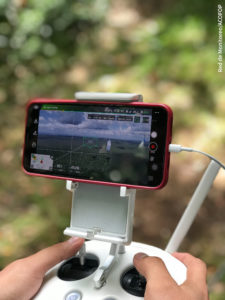
"We are envisioning a consolidated financing mechanism in Latin America that will have a substantive impact on these territories," says Sánchez. "That is to say: we are going to help both conserve a large amount of forests and raise the standard of living of the indigenous peoples and local communities that are there."
Pero para que esa visión se haga realidad, Sánchez debe asegurarse de que los próximos pasos que tome la AMPB sean los correctos. Al momento de la publicación, la organización estaba debatiendo en qué país mesoamericano registrar legalmente el fondo. Anticipando que esa decisión se tomará en mayo de 2022, Sánchez dijo que espera que la creación del fondo tome entre 3 y 6 meses adicionales, abriendo para donaciones al final del año calendario.
Such a timeline would allow the fund to receive, among other things, resources from that COP26 pledge of $1.7 billion. The FTM is one of several regional financial mechanisms launched by indigenous peoples' and local community organizations to address inequality in climate finance. Funds like the FTM are part of a new generation of "direct access" financial intermediaries, controlled directly by indigenous peoples and local communities. This new "ecosystem" of financial institutions promoted by the Global Alliance of Territorial Communities is also known as the Shandia mechanism.
Direct financing to the territory
Once the fund is operational, Sanchez says projects that support the territorial security of indigenous peoples and local communities will be chosen, with projects prioritized based on the strength with which they adhere to three key principles: strengthening regional organizations; human rights legal assistance work; and supporting local economies. Seed money for the fund, including some initial pilot projects, was provided by the Ford Foundation and the Climate and Land Use Alliance (CLUA).
Todas las organizaciones miembros de la AMPB han preparado proyectos para financiamiento, siendo muchas, como la Red Indígena Bribri y Cabécar (RIBCA) en Costa Rica y la Federación de Productores y Agroforestales de Honduras (FEPROAH), enfocadas en apoyar negocios comunitarios con capacitación, asistencia legal, inversión y restablecimiento de vínculos de mercado en la reactivación económica post-COVID. Otros, como la Red Mexicana de Organizaciones Forestales Rurales (Red Mocaf) en México y el Pueblo Mayagna en Nicaragua, se enfocan en la capacitación, el desarrollo de liderazgo y el fortalecimiento organizacional para la promoción de políticas nacionales.
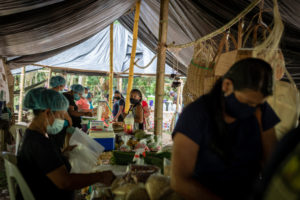
Como socio de la subvención, RFUS está brindando financiamiento y asistencia técnica continua al liderazgo de AMPB para institucionalizar el fondo. Las actividades bajo la subvención incluyen asegurar el reconocimiento legal del fondo, formalizar su gobierno interno y capacidad administrativa, y realizar actividades de divulgación para cumplir con los objetivos de capitalización del fondo.
Sanchez hopes that strong pilot programs in the fund's first year can have a cascading effect with national governments, inspiring public funding and private sector investment for communities that many nation-states have historically been hesitant to provide.
"We're going to show them that things can be done differently," Sanchez says. "Success stories can move government actors. We want to generate examples: to show them that their investment in us is safe. That when they give to us, they're going to get the results back."