By Víctor López Illescas, Program Officer, Natural Resources and Climate Change - Ford Foundation
Original article published in English by Ford Foundation
He can laugh about it now, but for years Marcedonio Cortave couldn't bear to think about the afternoon in 1995 when he was humiliated before his fellow Guatemalan peasants and chicle gatherers. The setting was a meeting involving the Maya Biosphere Reserve, an 8,340-square-mile expanse in the northern department of Petén that the government had set aside five years earlier to preserve its virgin forest and the jaguars, pumas, tapirs and some 300 species of birds that reside there. Cortave was present as part of a delegation of forest community representatives. Together, they had argued that their communities should continue to live in the forest and continue to obtain firewood and the milky rubber that had provided their livelihoods for as long as anyone could remember. But the industry executive who spoke after him had a different idea.
Después de reproducir un video ingenioso que yuxtapone a los empleados sonrientes que atienden los viveros de árboles de última generación con los campesinos locales que talan árboles e incendian el bosque, el ejecutivo le dijo a la multitud reunida que lo que las comunidades de Petén necesitaban era inversión y capacidad técnica, ninguna de los cuales podría proporcionar un humilde recolector de chicle. “Si tomaras a alguno de estos representantes de la comunidad”, concluyó, volviendo la mirada hacia Cortave y los modestos líderes comunitarios, “y lo sostuvieras boca abajo, verías que no cae dinero de sus bolsillos. ¿Podrían estos muchachos pagar el pasaje en autobús de regreso a sus pueblos?»
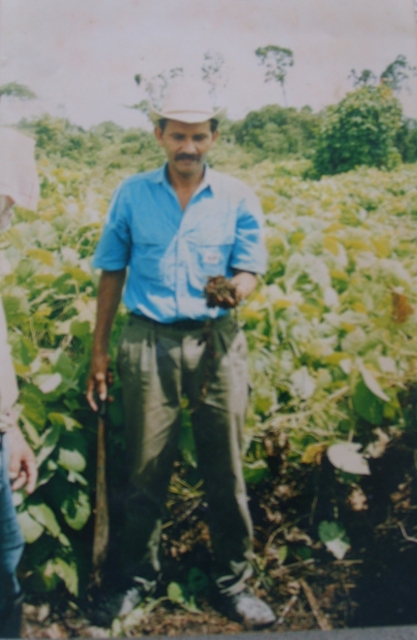
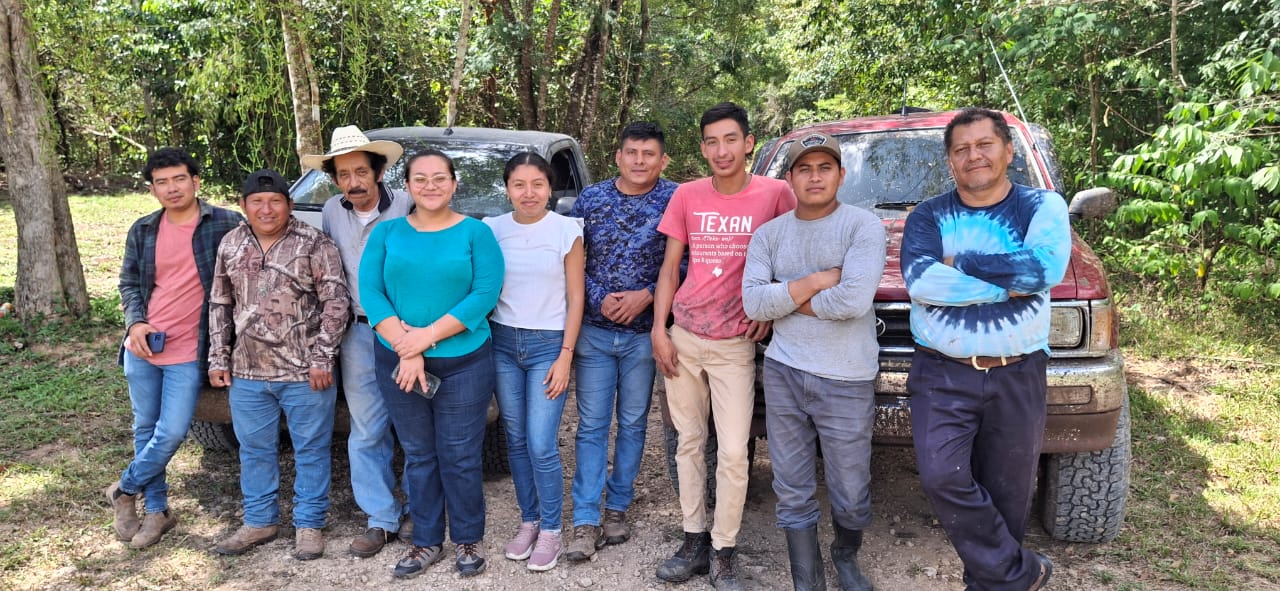
In 1996, a young Marcedonio Cortave and other community leaders presented their collective vision for a community forest management project.
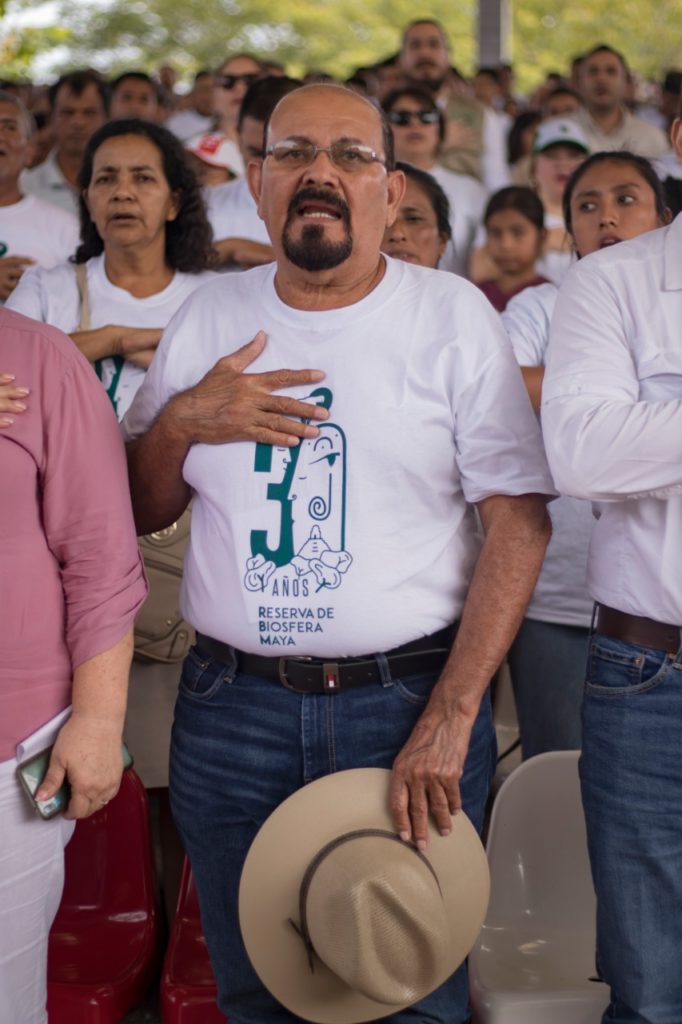
More than 25 years later, Cortave and the people of the Maya Biosphere Reserve have created one of the most successful and enduring examples of community-based sustainable forest management in the world.
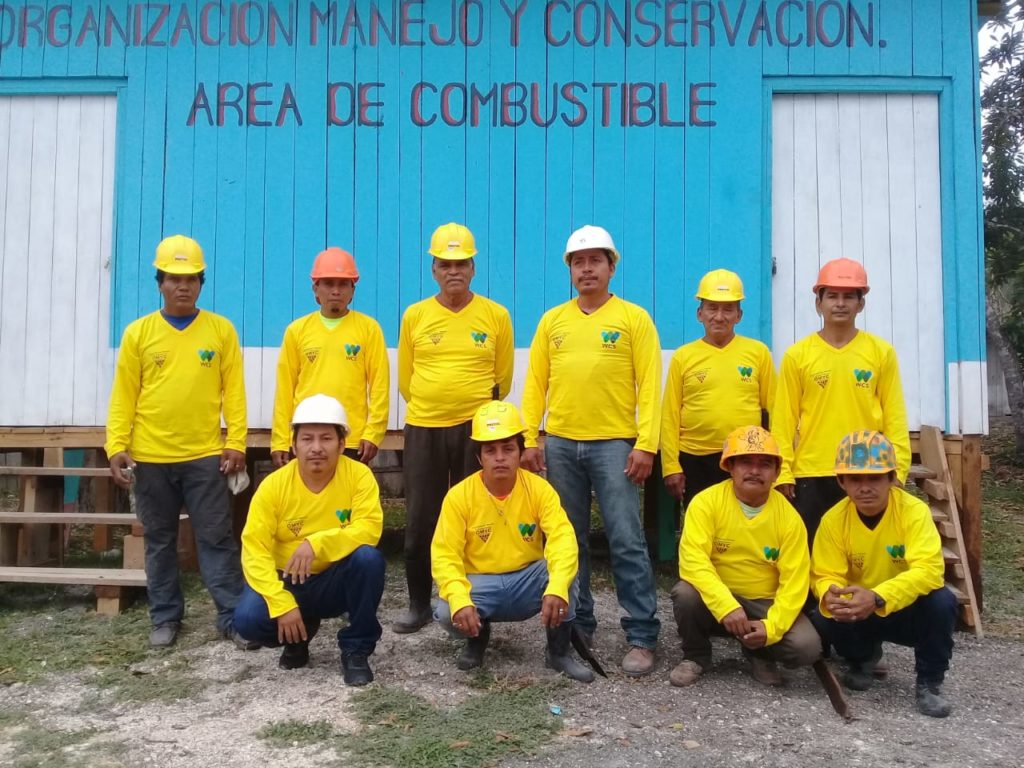
Now, 25 years later, Cortave, who admits he was so poor back then that he sometimes survived on a couple of bananas a day, proudly serves as executive director of the Association of Forest Communities of the Petén, or ACOFOP, one of the most important and long-standing examples of successful community-based sustainable forest management in the world. Since its founding two years after that harrowing meeting, ACOFOP's indigenous and forest communities, which the Ford Foundation has funded since 1999, have protected their forests from illegal logging and other threats while forging cohesive and profitable enterprises in the process.
In an era of climate change, ACOFOP's success benefits us all. At the current rate of carbon dioxide emissions, we will reach the climate tipping point within 20 to 25 years. To mitigate climate change, we must protect and restore the world's forests, which capture and reduce emissions, and decarbonize and shift away from fossil fuels. While fires routinely rage across much of the Reserve, ACOFOP's community-managed forests suffer less tree loss and sequester more carbon than other forests, including those under government protection.
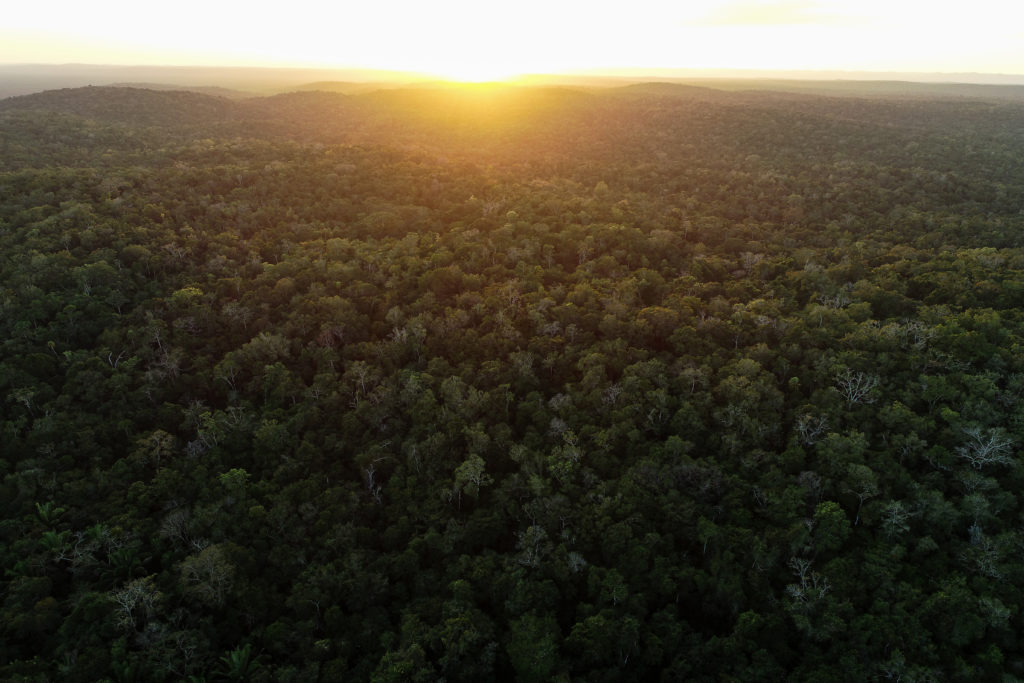
There is also the Coronavirus connection. Over the last year, the global alliance of Indigenous and Forest Communities, of which ACOFOP is a member, highlighted how the same forest destruction that drives climate change is also driving the rise of pandemics. Deforestation and human activity have disrupted the natural ecology of the world's forests, increasing the risk of disease transmission from animals to humans.
However, a quarter of a century after its existence, ACOFOP's concessions remain dangerously under siege, threatened by external forces and by a highly volatile institutional context, where any government may choose to defend or not its continued existence.
A tense story, with a long shadow
Beginning in 1960, inequalities in land distribution in Guatemala, combined with a long history of discrimination against the indigenous peoples who represent 43 percent of the country's population, culminated in a devastating civil war. The unrest raged for 36 years, claiming some 200,000 lives in the process, including Cortave's brother. (That's why my own childhood was spent away from my Guatemalan homeland).
Much of the fighting took place in the Petén, where, due to previous government policies, indigenous Mayan peoples lived uneasily alongside transplants from all over Guatemala and neighboring countries. The 1996 Peace Accord included provisions for agrarian reform, and Cortave and the forest communities were determined that their vision of community-managed forests should find a place among them. While most conservationists argued that the country's forests should be declared national parks and overseen by strict government protection, they believed that the people who lived in and made a living from the forests had the greatest incentive to protect them.
Cortave and the leaders spent years laboriously cultivating colleagues and forging alliances among a population so traumatized by war and divided by classism, extreme poverty and racism that most people were unwilling to participate at all. At the same time, they pleaded their case before government officials, including those of the National Council of Protected Areas, or CONAP, which oversees the Biosphere Reserve. By 2001, ACOFOP had succeeded in obtaining 12 forestry concession contracts from CONAP. The 25-year agreements, which entrusted land management to the various communities that inhabit the reserve, covered a total of 500,000 hectares, approximately one-fifth of the entire reserve.
A unique model in the world
Each of ACOFOP's member organizations, whether cooperatives, limited liability companies or nonprofit organizations, establishes its own rules and business plans for managing its forests, although all are required to submit annual fire prevention, control and monitoring and investment plans to CONAP. The communities also regulate their activities according to the rigorous standards of the Forest Stewardship Council, a globally recognized sustainability framework whose certification confers legitimacy and the enhanced market value that accompanies it. In Uaxactún, for example, a 200,000-hectare concession located north of the ancient Mayan city of Tikal, community members harvest only 600 trees per year, ensuring the continued health of the forest.
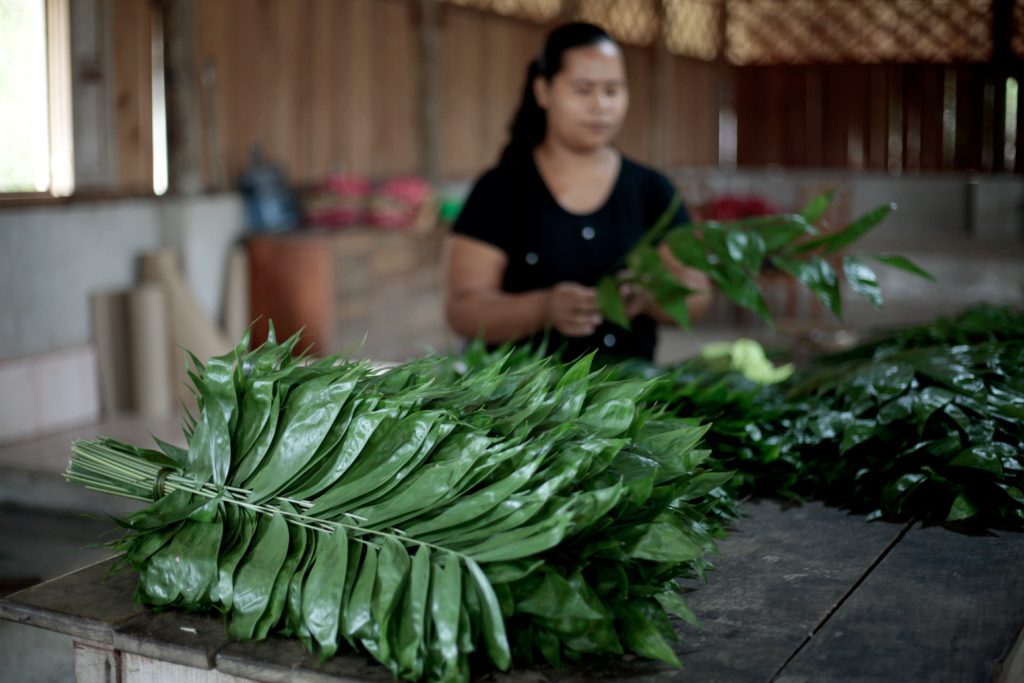
ACOFOP also provides members with state-of-the-art technology, such as drones and GPS trackers, and trains them to help them monitor the land and respond to emergencies. In addition, ACOFOP continues to collaborate with the national government on behalf of concession communities, helping them to develop and market their forest resources, which, in addition to chicle, include mahogany, cedar and non-timber products such as xate palm leaves (popular in flower arrangements), allspice and locally prized ramon nuts.
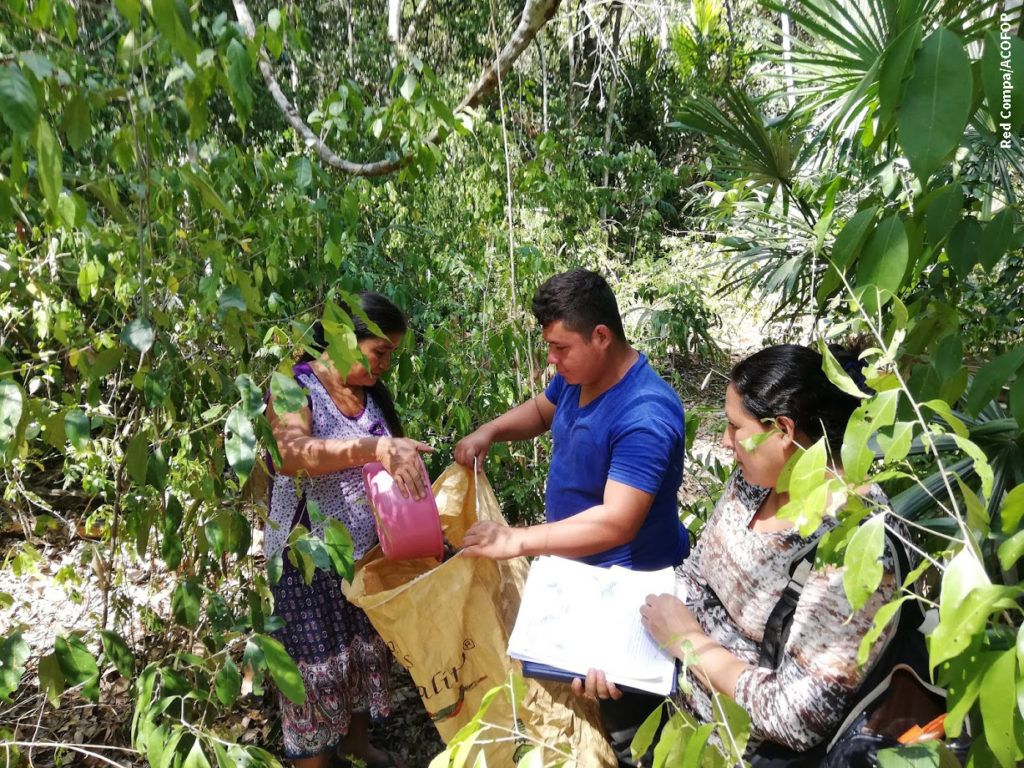
It has not always been easy. Two concessions collapsed after community members succumbed to intimidation from encroaching ranchers, and industry interests constantly pressure the government to hand over some of the land, but over the years the groups have seen their fortunes flourish, with the support of government, civil society, and other allies such as the Rainforest Alliance.
Moving from simply exporting raw materials to establishing their own sawmills and selling finished wood for use in flooring and guitars has meant increased income and less dependence on a few products. Some communities have begun to diversify the types of wood they harvest, while others are beginning to explore the commercial sourcing of medicinal plants and forest flowers such as orchids, and younger generations are even working to develop organic cosmetics. Those located near archaeological sites have established tourism operations, thus securing other sources of income. In Carmelita, for example, located near the Mayan ruins at El Mirador in the far northern Petén, locals conduct low-impact treks, providing equipment and guides for the three-day trip to the site. In 2003, some of the concession groups joined together to create Forescom, a community-owned company that provides assistance in timber processing, financing and marketing.
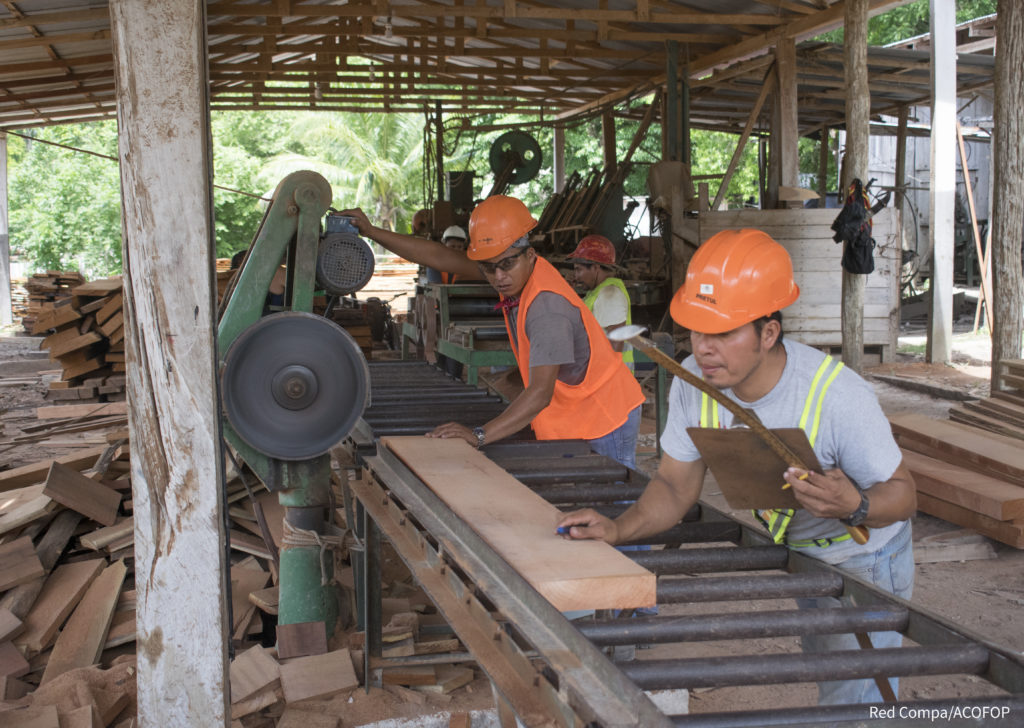
In the process, the diverse communities have come to trust one another, overcoming deep divisions and lingering prejudice against indigenous populations in a situation that remains unique in Guatemala.
Successes that accumulate for all of us
Between 2007 and 2018, ACOFOP member organizations sold nearly $60 million in forest products, with about $5 million in sales in 2018. Such goods represent 40 percent of their total income, according to Juventino Gálvez, who formerly served as CONAP secretary, and in some cases, that figure rises to 60 percent, more than the remittances from abroad that support so many people in this impoverished country. Wages in forestry and tourist jobs such as cook and driver can be up to three times higher than what other rural Guatemalans earn.
Since signing the contracts, the communities have paid more than $2 million in taxes, money that the national government can use for infrastructure and services that benefit all Guatemalans. But they also reinvest at home, building schools and health clinics that they had long survived without. In addition to helping with campaign efforts that amplify community voices to government officials and strengthening member institutions, ACOFOP offers a wide range of services to respond to a community's changing needs, said Andrew Davis, a researcher with the PRISMA Foundation, which helps communities throughout Latin America manage their natural resources. One of its leaders might lend a vehicle to take someone to the hospital, for example, or help with cash in an emergency.
«Eso es realmente clave para la acción colectiva entre las comunidades», dijo. «Ese tipo de fomento de la confianza es la base de lo que mantiene el proceso en marcha».
These days, thanks to the success of ACOFOP's concessions (increased livelihoods and gains in health and education, as well as on the biodiversity and climate change fronts), visitors from forest communities in countries like Indonesia, Brazil and Colombia learn by example. After spending days touring concessions and talking with community leaders, they return home armed with information on how to organize their own communities, lobby their governments, secure markets and pool resources to invest in sawmills and other infrastructure that can help add value to their forest resources.
Aunque Davis reconoce que existen desafíos en otras regiones. Asegurar los derechos sobre la tierra y establecer un modelo similar a ACOFOP es un proceso largo, complicado y precario que requiere un compromiso incansable, la coordinación de múltiples socios, desde las comunidades locales hasta los funcionarios del gobierno, y una cantidad significativa de recursos. Las partes interesadas no solo tienen que defender sus argumentos en medio de un contexto político volátil y una fragilidad institucional, sino que, incluso cuando los derechos están asegurados, la lucha por mantenerlos nunca termina. Iliana Monterroso, una científica ambiental nacida en Guatemala con el Centro de Investigación Forestal Internacional, ofreció el ejemplo de Perú, donde, a pesar de las leyes que en papel reconocen los derechos indígenas a la tierra, las comunidades forestales luchan por cosechar beneficios debido a la falta de apoyo de los gobiernos, organizaciones sin fines de lucro y otros. Algunos de los indígenas con los que trabaja allí le dijeron: «No podemos comernos el título, este papel». Saben muy bien que el trabajo solo comienza con el título de propiedad.
A future in danger
Twenty-five years later, as the Petén concession agreements are being renegotiated, multiple threats persist. In the western Maya Biosphere Reserve, along the border with Mexico, oil interests are targeting deposits for possible drilling. Across the Petén, forests continue to be razed by large agribusinesses to establish oil palm plantations, while drug cartels establish cattle ranches, build transit routes or secret airstrips, and launder illicit money. A 2020 study found that up to 87 percent of deforestation in the region was due to this type of illegal ranching. Paying a park ranger is much easier, after all, than infiltrating an entire community whose livelihood depends on its ability to keep its forests standing. (ACOFOP communities spend a combined half-million dollars annually to patrol their forests with drones and GPS trackers.)
Since 2001, another threat has loomed in the form of a proposed tourism project. U.S. archaeologist Richard Hansen, who has worked in the region for three decades, has made at least four attempts to influence legislation that would allow him to develop a tourism project around El Mirador. Claiming that the forests around the archaeological site are threatened by illegal logging, drug trafficking and deforestation by small farmers, the arguments in favor of the project neglect not only the importance but the very existence of ACOFOP's forest communities, trying to make them invisible. "That's one of my criticisms of Guatemalans, there is no vision," Hansen said in a VICE interview. Hansen suggests that the only way to protect it is through his plan, one that involves five-star hotels, visitor centers and a miniature train like those that wind through Disneyland.
Although prominent Guatemalan archaeologists have spoken out against the proposed project, it has won the support of several elite conservation groups and politicians. And Hansen may be inching closer to realizing his dream: in December 2019, James Inhofe, a senator from Oklahoma, introduced a bill that would make $60 million in U.S. taxpayer money available for security and tourism development in Guatemala and parts of Mexico. The El Mirador project could involve a change in CONAP contracts and will likely absorb more than half of the Uaxactún concession and more than half of the Carmelita concession.
"We have to do everything we can to make concessions more secure so that communities can focus on defending their forests," he said. "Because defending the forest is a huge task."
«Se asientan en tierras realmente valiosas que son codiciadas por personas muy poderosas», dijo Davis, y agregó que la situación requiere inversiones constantes de tiempo y dinero simplemente para asegurar el derecho a existir de las concesiones. En 2002, por ejemplo, el cabildeo por el proyecto dio como resultado una orden ejecutiva que requirió una cantidad significativa de recursos de ACOFOP —que incluían viajar a la ciudad de Guatemala para tener conversaciones permanentes con las autoridades nacionales— con el fin de amplificar sus logros y lograr que se revocara. Pero cada cambio de gobierno podría significar un nuevo director de CONAP, uno que puede o no estar entusiasmado con el programa forestal comunitario.
More recently, the Guatemalan government has expressed support for the ACOFOP model, with two of the nine concessions already renewed. As the renewal process continues, ACOFOP is advocating for more concessions for community groups in the Reserve. "We have to do everything we can to make the concessions more secure so that communities can focus on defending their forests," he said. "Because defending the forest is a huge task."
A changing society
There are also internal threats, including the possibility of groups falling victim to their own success. One concession company, for example, has seen its membership shrink from 60 to 30 as older shareholders begin to buy each other out. In other communities, the original members are aging, and some of their children, thanks in part to the education provided by their parents, have gone off to college or careers in the city and have no intention of returning to continue the work of protecting their land.
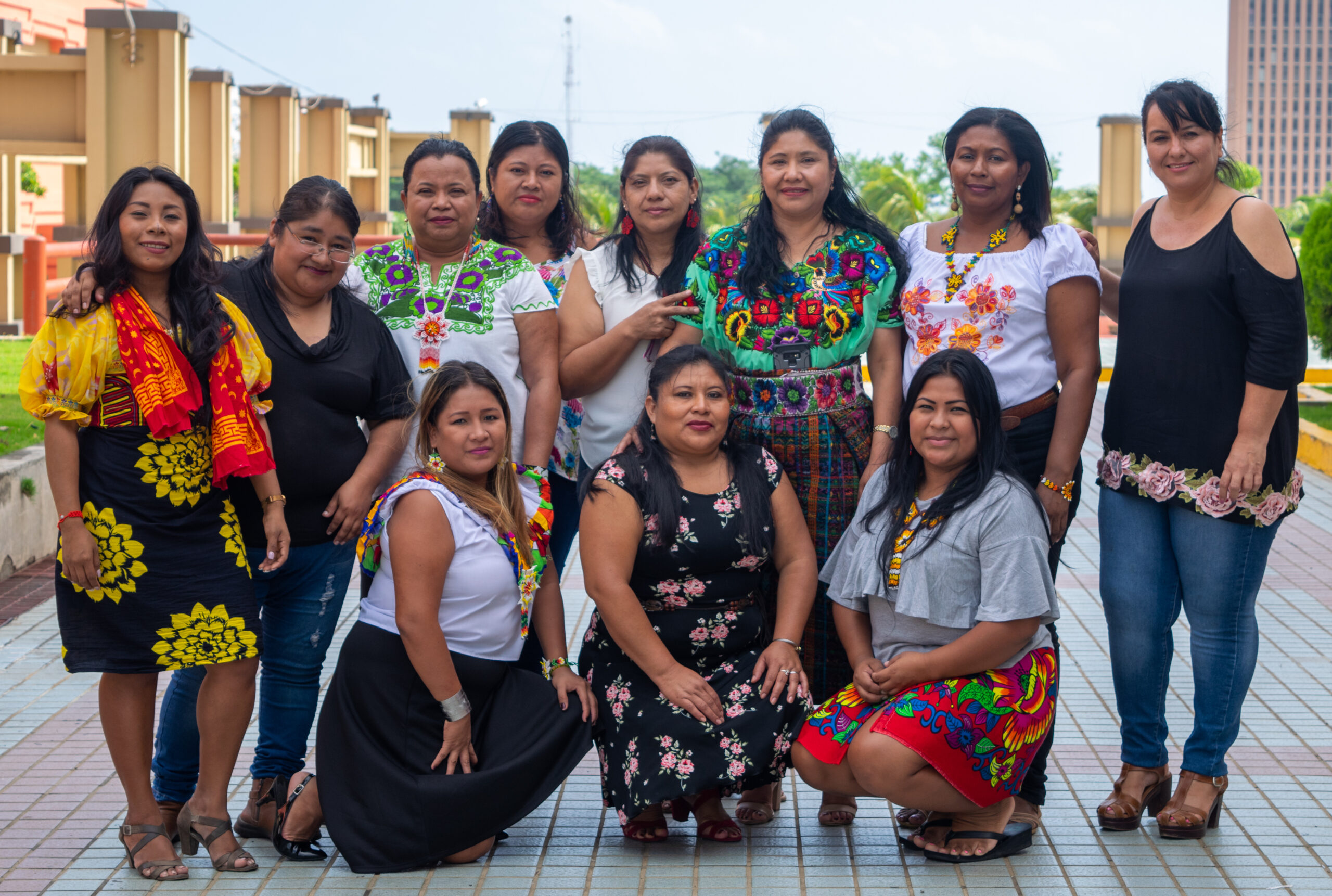
To avoid such entropy and ensure the success of future concessions, some of the groups have begun to amend patriarchal rules such as the one stipulating that shares can only be inherited by a firstborn son. ACOFOP has intensified its own outreach efforts, particularly to women, indigenous and non-binary members of its communities. Among those involved in its 500-member Women's Network is a 32-year-old Uaxactún native named Carolina Alvarado, who also sits on the seven-person board of her concession. "I tell all the women," Alvarado said, "'if you grew up in Uaxatún, you are part of the organization and you are very important.'" It is these new members, she added, who often bring fresh ideas.
"We need to understand that we are a multicultural community," Alvarado said, "we are diverse, and that is a richness, a wealth in terms of our culture and our social value."
Like the concession agreements themselves, Guatemala's post-conflict government is only 25 years old and the country's still-scarred population is struggling to build a multicultural and egalitarian society in the face of impunity and rampant state corruption. "The way the power structure works," Davis said, "there is a constant struggle for resources that is increasingly mediated by force and violence rather than institutions. So while the forest communities of the Petén are showing the world that they are contributing to society and conserving the forests, those arguments can only go so far in this volatile institutional and political context."
Es por eso que el apoyo global es tan crítico. A medida que crece la conciencia sobre la importancia de las selvas tropicales en la batalla contra el cambio climático, y ante la creciente evidencia de que las comunidades indígenas y locales son los mejores administradores de esos bosques, el mundo filantrópico debe continuar empoderando a grupos como ACOFOP. Ayudar a los gobiernos a menudo frágiles que supervisan estos valiosos recursos naturales también será clave, ya sea a través de fondos vinculados a los esfuerzos de sostenibilidad, mejores políticas comerciales y de drogas u otras medidas de gobernanza. El cambio climático y la desigualdad están indisolublemente ligados, y debemos reconocer que quién posee, controla y se beneficia de los recursos naturales determina el futuro de la tierra y las comunidades que la llaman hogar. Al apoyar a esos guardianes —los pueblos indígenas y locales— protegemos nuestros bosques y el planeta. Como Cortave señaló recientemente, “Los árboles no luchan entre sí; saben vivir en perfecta armonía. Es cuando los humanos se involucran cuando las cosas se complican».