By Levi Sucre, Coordinator of the Mesoamerican Alliance of Peoples and Forests
El pueblo bribri de las selvas tropicales de Costa Rica, salió del aislamiento solo en las últimas décadas. Por esto, a menudo se nos llama «las personas ocultas». A medida que el nuevo y mortal coronavirus se afianza en Costa Rica y en otros países de bosques tropicales, corremos el riesgo de volver a ser invisibles. Y no estamos solos.
In Africa, Latin America and Southeast Asia, governments have begun to allocate resources to combat the terrifying pandemic, but some indigenous leaders say authorities are ignoring the people and our needs as we too prepare to fight this disease. If communities collapse under the weight of the current global health crisis, all citizens of this warming planet will suffer as well. Studies show conclusively that indigenous peoples are by far the best stewards of the planet's forest carbon and biodiversity.
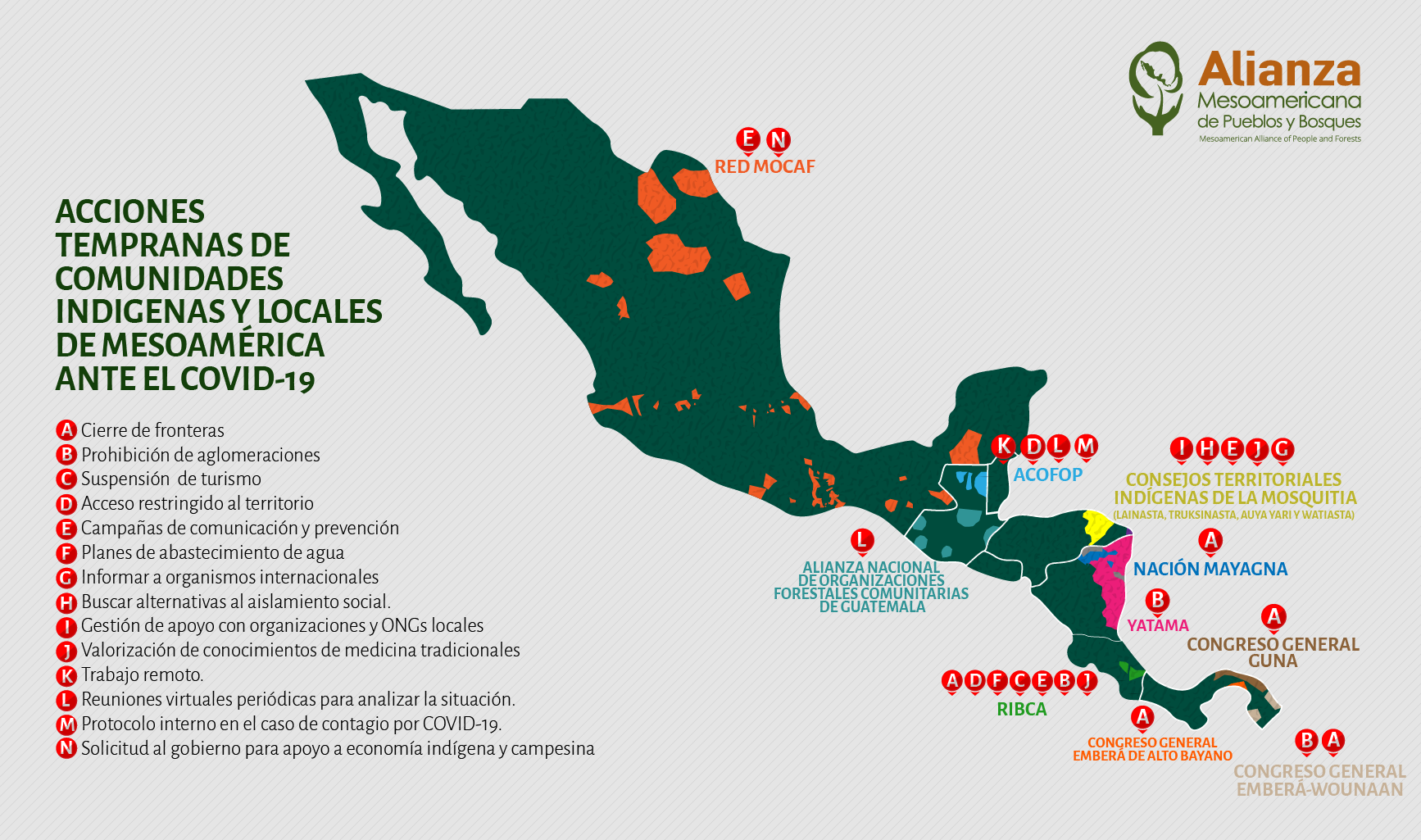
Like other communities in Mesoamerica and around the world, the people of Costa Rica have moved quickly to cancel events and cut off access to our territories from the outside. Through radio and WhatsApp messages in local languages, we are reaching remote communities with lessons on how to protect themselves. We are building stockpiles of food, water and hand sanitizer.
On a much broader stage, as a member of a global alliance of indigenous territorial organizations, I know that such efforts will not be enough. My colleagues and I believe that covid-19 will hit communities the hardest. Our health systems are weaker than those outside our territories. We have traditional healers, but health workers are scarce.
Members of my village must travel 90 kilometers to reach a hospital, while several forest communities in Latin America lack access not only to basic medical care, but also to clean water and electricity. Like anyone with access to news, we feel anxious. Some relief would come if our governments would help us strengthen the measures we have already implemented.
We also want the authorities in our countries to prevent government agencies and companies from invading our lands. As the pandemic spreads, we are seeing signs that legal and illegal actors are increasing invasions of indigenous territories, taking advantage of the chaos. Our brothers and sisters in Brazil and other Amazonian countries report lax enforcement of laws and increased activities that have led to environmental destruction and the deaths of many activists throughout the rainforest nations, including Costa Rica.
Despite the challenges we share with other communities, indigenous Costa Ricans are likely to fare better than our allies in other countries. Since 1977, when I was nine years old, our national government has recognized the rights of our peoples. We have developed our own systems of governance and manage our traditional lands in a sustainable manner.
We have a voice in decisions that affect us, as the government includes leaders in the creation of Costa Rica's economic plans and its emergency plan. And Geyner Blanco, an indigenous leader, now serves as part of the government's central command operations team managing the pandemic.
But covid-19 has introduced a threat unlike anything we have seen since colonial Europe reached our shores. Even in Costa Rica we find ourselves in need of help. We join our colleagues around the world in imploring governments to support our efforts to protect our communities and care for those who become ill. And we demand that our national leaders take the following concrete actions:
1. Share accurate and timely information with communities about the pandemic, and ensure that information is distributed in native languages.
Include leaders in the development and implementation of emergency plans for accessing food, water, personal protective equipment and, eventually, treatment and vaccines.
3. Provide translators and transportation to obtain medical services.
4. Intensify the application of the laws that protect our territories from external invasions.
5. Involve us in any decision that affects us and our territories, whether the goal is to create a new protected area, address a pandemic, or reduce carbon emissions.
Through centuries of conquest and disease, indigenous peoples have too often remained invisible to our governments; too often our contributions have been ignored, despite a growing body of science suggesting that high-level conservation groups and governments should partner with us.
In Costa Rica, the Bribri not only produce world-class cocoa, we have knowledge and a way of life that keeps our forests standing and our environment in ecological harmony. We must continue to survive, along with our fellow citizens, until science brings us treatments and a new vaccine. For now, we need our national governments to help us protect our lands and ourselves against the human and viral agents that devastate health and habitat.
And when solutions emerge from a laboratory somewhere in the world, as they will, indigenous peoples will not be hidden as the Bribri once were. Instead, we will continue to fight for better lives for our communities and the world. And we will know that by saving ourselves, our countries will help save something much bigger.
This opinion article was published in El País of Spain.