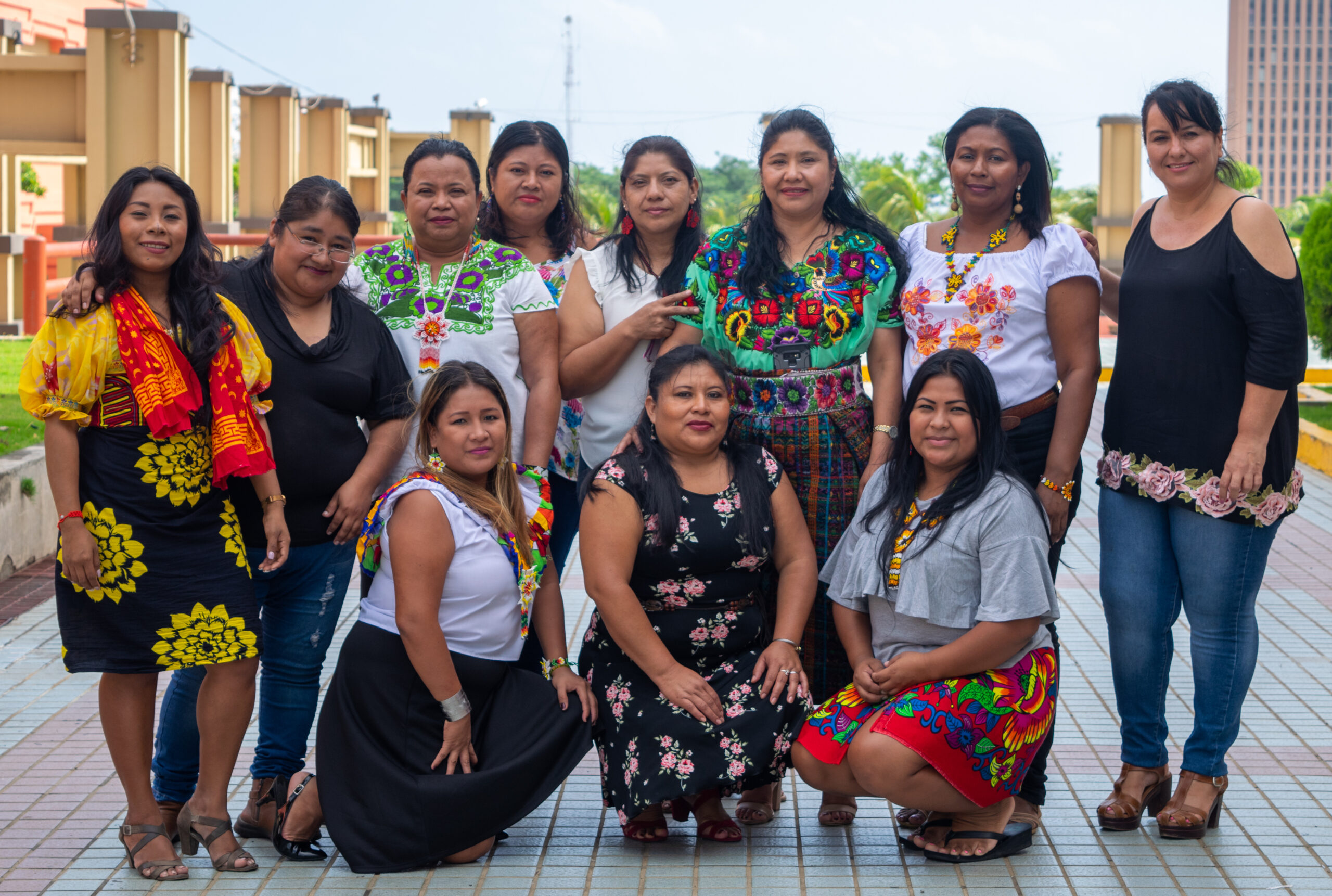
The increase in the frequency and magnitude of hurricanes worldwide is causing serious losses and damage to communities and indigenous peoples around the world. Territorial women are leading actions to mitigate and adapt to these challenges, based on their traditional knowledge.
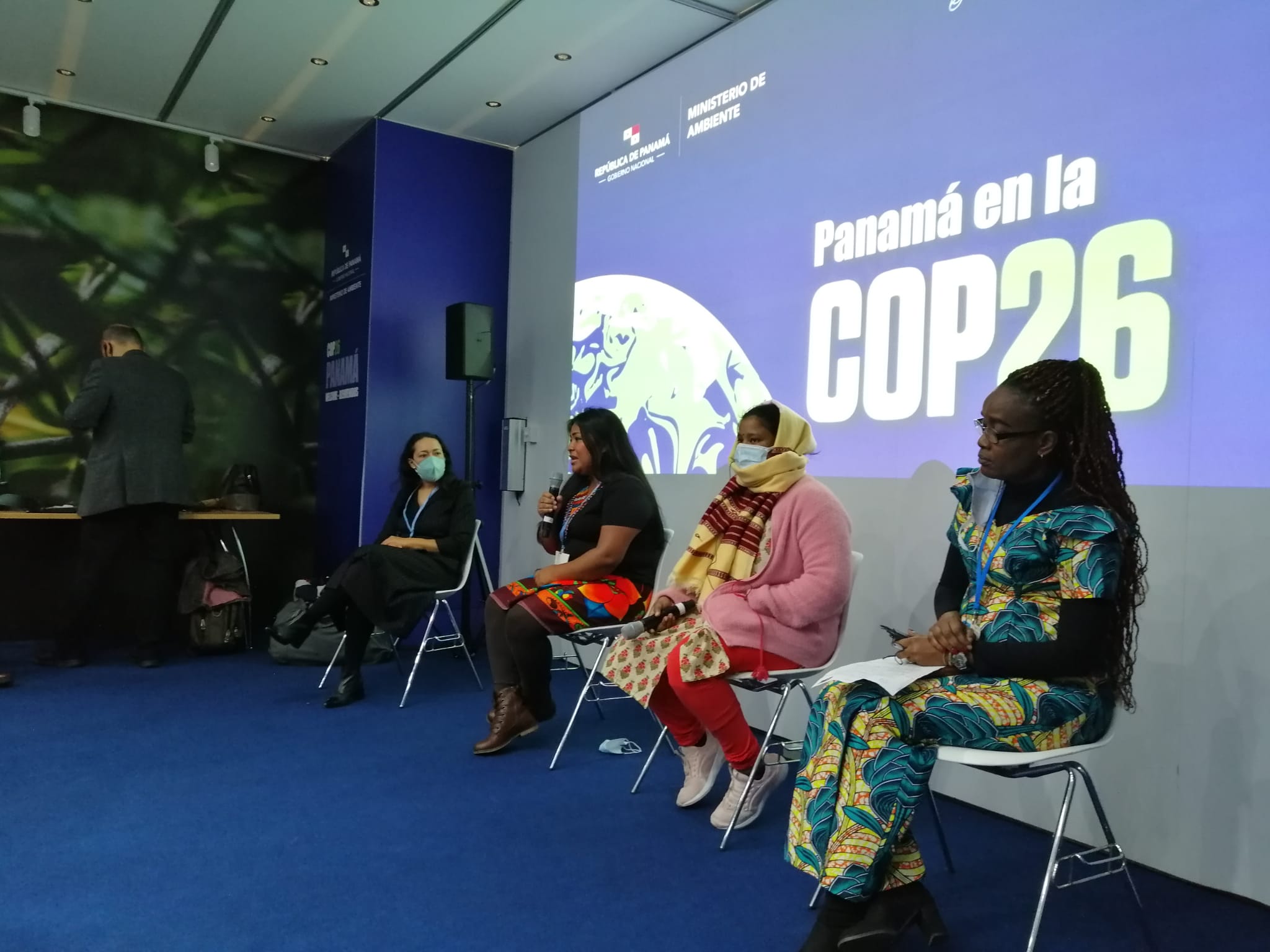
Within the framework of the United Nations Climate Change Conference, the Coordinating Committee of Women Territorial Leaders made visible experiences of resilience and disaster management led by women from the native peoples of Mesoamerica, Africa and Asia, in the event "Natural Disasters, Women and Community Governance of Forests" which took place on November 8 at the Panama Pavilion, Blue Zone.
At the event we will also present the #WomenResilient initiative: a call to the world's governments to address the loss and damage caused by climate change with a gender approach.
Sizing losses and damages
The impact of each natural disaster on a community involves the destruction of homes, contamination of water sources, loss of crops, seeds and native biodiversity. Communities are left in a situation of scarcity and it takes months to rebuild their homes and harvest their food again.
The insufficient response of States and international organizations means that humanitarian aid during and after these disasters is scarce and late. Communities survive these extreme events through their own resources, knowledge, leadership and community organization. Each community defines measures, assistance protocols, evacuation routes and distributes roles to prepare for and mitigate losses and damages.
Women are in charge of harvesting and preserving food, collecting and storing seeds and medicinal plants, setting up shelters, cooking, healing the sick and injured during the crisis. Once the disaster is over, they are also in charge of reactivating productive systems. This is an increasingly challenging task, as ecosystems lose their balance.
For example, with the impact of hurricanes Eta and Iota in the Miskito communities of the Nicaraguan Caribbean, all the large trees fell, leaving wild animals for several months without food other than seeds and seedlings from new plantings, significantly affecting production levels. As these communities practice self-consumption agriculture, they were at risk of running out of seeds after several failed planting attempts. After trial and error, the women came up with a new strategy: they changed planting zones. While the forest regenerated, they rested their usual plots and began planting family gardens near their homes.
Resilient Women
Even in such challenging circumstances, women territorial leaders have found, once again, in the knowledge they inherited from their ancestors, the strength and tools to reinvent themselves in the struggle for the defense of their territories and traditional ways of life; uniting, organizing and creating together creative response strategies to reactivate traditional forms of food production, which are essential for good living and the preservation of their cultures.
Some have planted gardens in their homes, where it was easier to control pests, others have created networks and fairs among producers in nearby communities to exchange products, others are responsible for safeguarding native seed banks, others learn new techniques to recover soils or adapt and vary the cultivation areas to have reserve harvests.
Thus arises the #Resilient Women initiative , to recognize the experiences of good practices devised and implemented by community and indigenous women around the world, which can be an example for other peoples.
At the event, we shared successful experiences of community self-management in Mesoamerica, Africa and Asia in the voices of Sara Omi, Emberá leader, lawyer specializing in Indigenous law and president of the Coordinating Committee of Women Territorial Leaders of Mesoamerica; Archana Soreng, Member of the United Nations Secretary General's Youth Advisory Group on Climate Change; Chouchouna Losale, Territorial Leader from Africa; with moderation by Natalia González and comments by Solange Bandiaky-Badji, Director of Rights and Resources Initiative (RRI).
Direct funds with a gender focus
In Latin America, indigenous and community women produce 70% of their families' food. It has been proven that supporting family agriculture led by women is effective for the food security of their communities, the creation of jobs and local income, and helps to avoid migration to urban centers. At the same time, they play a fundamental role in the protection of the forests, as they are the transmitters of the ancestral cosmovision of good living in harmony with Mother Earth.
Governments and international organizations have the responsibility to generate an efficient, direct and gender-focused financing mechanism to reduce the losses and damages that are directly related to the impacts of climate change on communities; in addition to creating measures to support the work of protection, preservation and restoration of forests that these communities carry out on a daily basis, for the sake of life on earth.
Listening to and taking into account the good practices and traditional knowledge of communities and indigenous peoples is fundamental to defining global actions in the face of climate change.