-
Invasions of indigenous territories and the criminalization of forest defenders remain a constant threat.
-
Justice is achieved in two trials for crimes against indigenous leaders in Costa Rica and Peru, setting a precedent against impunity.
This month, justice was achieved in two cases of violence against indigenous defenders in Latin America: the murder of Jehry Rivera of the Bröran people in Térraba, Costa Rica; and the murder of four Ashéninka leaders of the Alto Tamaya-Saweto community in Peru.
TÉRRABA CASE
The town of Térraba, located in southern Costa Rica. The invasions of the territory that initiated the construction of the El Diquís hydroelectric project in 2013.
Jehry Rivera was part of the indigenous resistance leading a land recovery process when he was killed with five shots in the back in a confrontation on February 24, 2020.
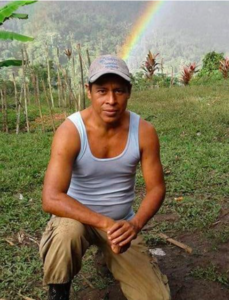
Elides Rivera, his aunt, an activist of the Bröran people of Térraba, has been fighting for justice in his case ever since. On February 1, the lumber dealer guilty of the murder was convicted of aggravated homicide, illegal possession of a weapon and aggravated threats.
For Elides, although the trial "means progress, because it shows that the territories are ours (of the Bröran people) and how the usurpers and invaders have violently taken over our territories"; currently the territory continues to live in a tense atmosphere "we cannot say that we are without risk, we are always at risk, they always have messages calling for hatred, violence and xenophobia. It is the environment we have always lived in". (source Semanario Universidad)
Likewise, he recognizes that the process of change towards effective justice "is not automatic, we will continue to denounce the impunity that still reigns in the case of Sergio Rojas Ortiz" Bribri activist of the Salitre territory and founder of the National Front of Indigenous Peoples (Frenapi) who was murdered with fifteen bullets in his home in 2019.
"In all of our reports, the average number of murders of indigenous people is one-third of the total number of murders of environmental defenders globally, but that ratio is tremendously overwhelming because only 4% of the world's population is indigenous peoples."
Marina Comandulli, Campaigns Officer, Global Witness
SAWETO CASE
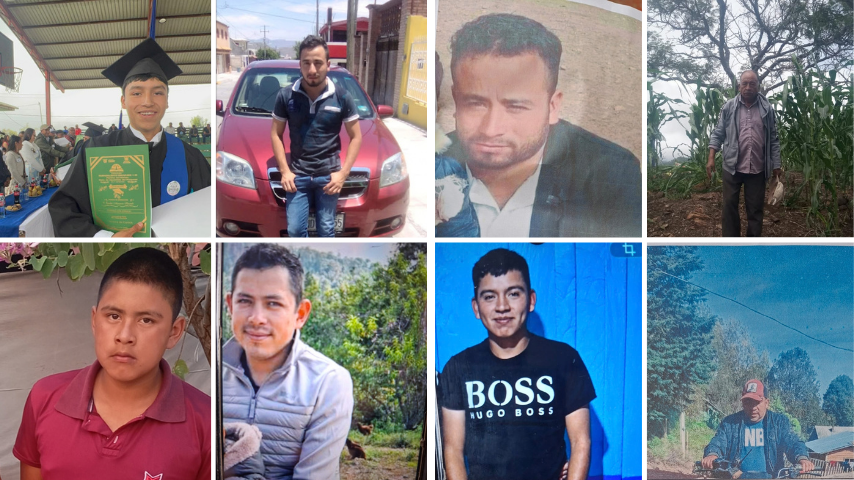
Edwin Chota, Jorge Ríos, Leoncio Quintisma and Francisco Pinedo were the four Ashéninka indigenous defenders from the Alto Tamaya-Saweto community, killed in September 2014 by illegal loggers.
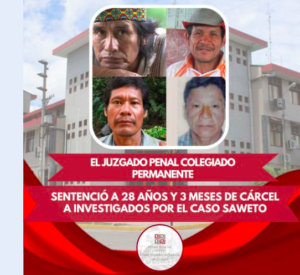
While fighting for the justice process, according to Mongaby 's report on the case, the families of the defenders were victims of strong threats while the forest for which they are fighting (recognized and titled for 78,129 hectares) was again invaded by illegal loggers and growing groups of coca growers. In fact, fear forced many Ashéninka inhabitants of this sector - close to the Brazilian border - to move to live dispersed in the Amazon.
According to the latest report from the Regional Forestry and Wildlife Management (Gerffs) of the Regional Government of Ucayali (the region where the Tamaya-Saweto community is located), this department registered 31,543 hectares of forest cover loss in 2021 due to illegal activities. The increase in deforestation began in 2008, when Edwin Chota, one of the murdered indigenous leaders, filed his first complaint about indiscriminate logging in his community.
At the local level and specifically for Saweto and the families of the 4 victims, justice was achieved. It is still a pending task that this justice is achieved not only by punishing the material or intellectual authors of crimes against indigenous environmental defenders, but also by directing efforts to dismantle the prevailing criminal system at the global level. As mentioned in one of the ILO recommendations regarding Saweto's claim. It demanded the Peruvian State to take effective measures against the mechanism of enabling illegal logging.
Margoth Quispe, Lawyer who defended the Saweto Indians
CALL FOR JUSTICE
Although the investigation and defense processes are slow and many cases remain unpunished in the region, we are pleased that these two convictions set a precedent against impunity.
Desde la Alianza Mesoamericana de Pueblos y Bosques (AMPB) celebramos la fuerza y el compromiso de los defensores históricos de la tierra y demandamos que la justicia sea por fin una realidad y que los gobiernos y mecanismos de justicia internacional tomen acciones concretas y de fondo para frenar los procesos de extractivismo que amenazan la diversidad biológica y cultural del planeta.