This Thursday, June 17, the high-level virtual forum in commemoration of the World Day to Combat Desertification and Drought highlighted the fundamental role that indigenous peoples and local communities play in the protection of ecosystems that prevent desertification and drought. This celebration aims to raise awareness about international initiatives to combat these phenomena and about the need to restore the balance between people and nature.
Levi Sucre Romero, coordinador de la Alianza Mesoamericana de Pueblos y Bosques (AMPB), resaltó que el conocimiento ancestral contribuye a la transformación de las tierras degradadas en tierras sanas.
"We cannot infringe on Mother Earth or what is in her, such as natural resources. That is why we have a conviction of respect towards nature, the trees, the wind, the water and we treat them with great respect, because what we do with her or her resources, affects us directly in our lives and from there starts the principle from the cosmovision and spirituality of the indigenous peoples, that all these beings, for us, living beings, are protected by spirits and for many years they have been before us" said Sucre.
He also commented that climate change is one of the main problems on the planet and is currently beyond our control, adding that indigenous peoples and local communities have had to learn and implement new practices and knowledge in order to survive the effects of climate change, especially in food production and food sovereignty.
"We have had to change our relationship a bit in that we no longer have a geographic space to exercise our cosmovision, we even have problems of rights of justice by the State, we have also learned to dialogue with other peoples, with other people and we have always put this knowledge on the table to seek meeting points between society, especially decision makers on these issues."
Likewise, Sucre stated that the technological advances of indigenous peoples and local communities favor the fight against climate change.
"We cannot produce the same amount of beans or rice because of climate change, there is a lot of rain, so we have to start using new knowledge and new production techniques such as greenhouses in smaller spaces with the use of technology, also, we are inserted in the market for the sale of products, we use technological tools to communicate, to sell and promote.
Additionally, Sucre expressed that, at the Mesoamerican level, indigenous peoples are promoting how to control forests against illegal logging and hunting through the use of drones, in order to continue preserving forests and natural resources.
"It is not only about cutting a tree and leaving the land exposed to desertification, but it is also about the fact that if a tree is destroyed, a great spirituality is destroyed, which is the cultural basis of the indigenous cosmovision.
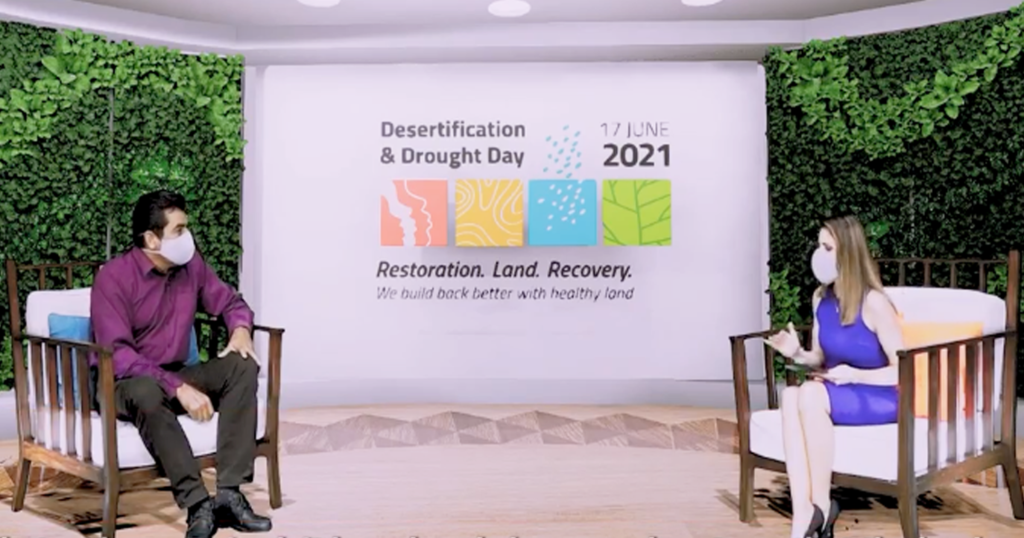
About the international forum
The event, led by Carlos Alvarado Quesada, President of Costa Rica, and Andrea Meza Murillo, Costa Rican Minister of Environment and Energy, demonstrated the actions implemented that allowed Costa Rica to become the first tropical country to halt and reverse its deforestation and forest degradation process.
Meza also spoke about the Payments for Environmental Services (PES) program, which has been implemented for more than 20 years and has helped to halt deforestation in Costa Rica and recover forest cover, which currently stands at 54% of the national territory. In this program, the indigenous worldview has been key. Especially the participation of the Bribri and Cabecar Indigenous Network (RIBCA), which has played a key role since 1996 in developing the PES scheme.
"Land restoration is a proven, cost-effective strategy that can enhance sustainable economic recovery. It can create green and fairer jobs, improve rural communities and offer important co-benefits for human health, biodiversity and climate change," concluded Minister Meza.
On the other hand, the forum was attended by high-level and world-renowned leaders, among them: Christiana Figueres, former executive secretary of the United Nations Framework Convention on Climate Change and founder of Global Optimism, Carlos Manuel Rodríguez, director general and president of the Global Environment Facility the secretary general of the United Nations (UN), António Guterres; the president of the UN General Assembly, Volkan Bozkir; the executive secretary of the United Nations Convention to Combat Desertification (UNCCD), Ibrahim Thiaw.
Also present were ministers of the environment from various countries such as Gabriel Quijandría Acosta (Peru); Philda Kereng (Botswana); Abdullah bin Mohammed Belhaif Al Nuaimi (United Arab Emirates); Guomundur Ingi Guobrandsson (Iceland), Dalila Boudjemaa (Algeria) and Amadou Lamine Guisset (Senegal).
You can watch the event here.