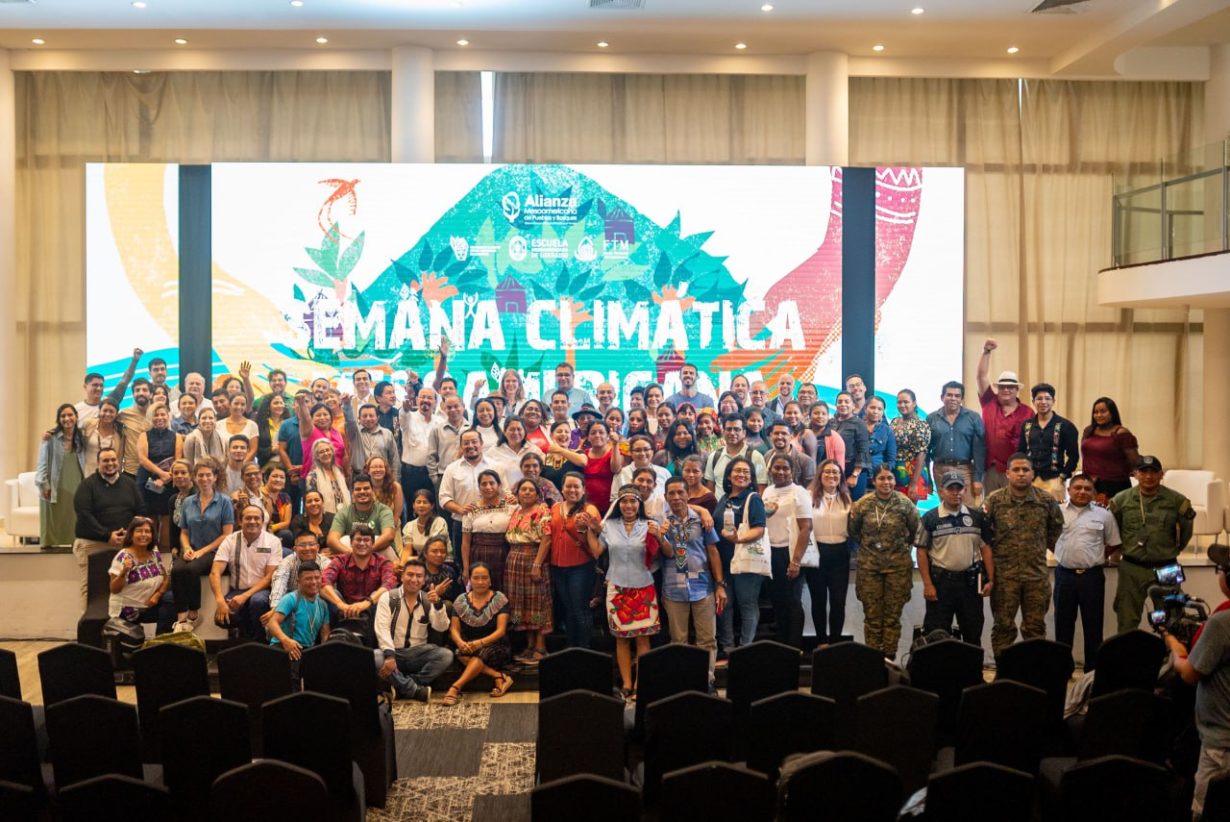
The Mesoamerican Alliance of Peoples and Forests (AMBP) led the first Mesoamerican Climate Week the first Mesoamerican Climate Week held in Panama City from June 13 to 16, 2023, to publicize and highlight the territorial experiences of Indigenous Peoples and Local Communities in forest management, care and conservation.
The event brought together more than 200 people, including 80 leaders from the region and the world. Their voices were united to call for action and to advance direct funding for projects focused on the preservation of their territories. In addition, they had spaces for dialogue with political authorities in the region, NGOs, donors and otherNGOs, donors and other civil society organizations to continue protecting forests and ecosystems for the benefit of all humanity.
These four days made it possible to create a more inclusive, fair and democratic agenda in which the voices of the territories were able to express themselves with ownership and time. The dialogue focused on four different thematic axes: Direct Financing, Capacity Building, Ancestral Agriculture, Territorial Governance and Forest Management. Here you can watch the recordings of the event
A week with important launches
During the Mesoamerican Climate Week, important launches took place, including the proposed additional layer on Indigenous Peoples and Local Communities (IPLCs) rights within the ART TREES standard. additional layer proposal on the rights of Indigenous Peoples and Local Communities (IPLCs) within the ART TREES standard. This approach is based on principles and procedures that seek to drive the high integrity carbon market, based on international and national law agreements. This ensures the free and informed inclusion and effective practice of safeguards in terms of IPLC rights in a preventative rather than reactive manner. This proposal was a collective effort of indigenous and community leaders from across the region, who took on the task of defining these guidelines in order to exercise their self-determination when governments and companies seek carbon hosted in their territories.
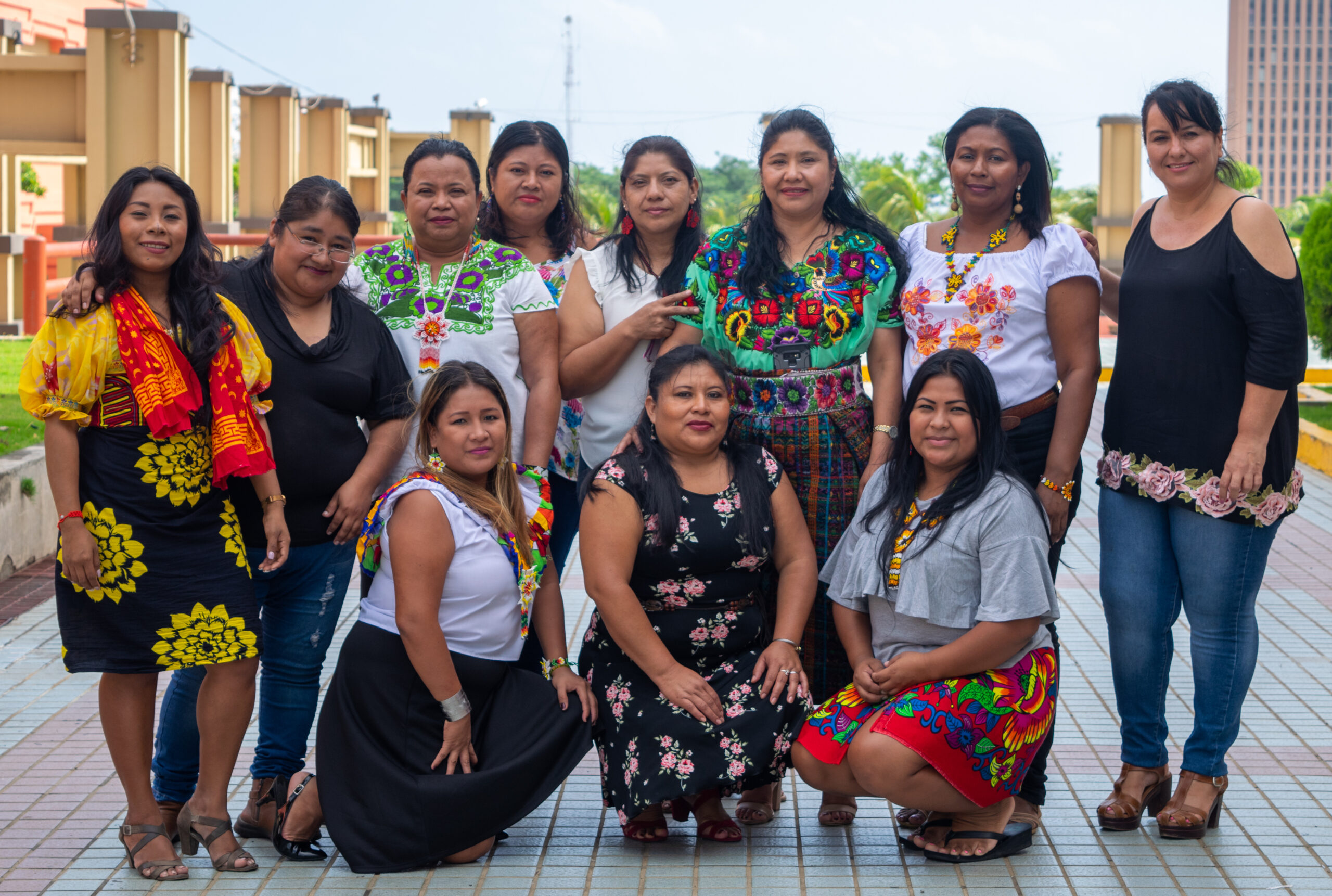
The Coordinadora de Mujeres Líderes Territoriales de Mesoamérica (Mesoamerican Women Territorial Leaders Coordinating Committee) presented the Regional Gender and Climate Change Plan, as a key initiative to address current challenges in the region. This plan is the result of a co-creation process of several months and includes proposals to strengthen community organizational models, increase access to land for women, strengthen their production capacities from ancestral agriculture, promote the exchange of knowledge and support initiatives for learning and conservation of knowledge and cultural practices; as well as the creation of secure financial instruments, accessible and adapted to the real needs of our communities.
It was also the venue for the launch of the second edition of the study Who owns the world's land?by the Rights and Resources Initiative (RRI), which analyzes the amount of land legally recognized as owned or allocated by national governments to Indigenous Peoples.which analyzes the amount of land legally recognized as owned or allocated by national governments to Indigenous Peoples, Afro-descendant Peoples and local communities around the world.
This study mentions that in the last 5 years, globally, the area of designated and legally titled land increased by only 0.9%. 0,9%. In Mesoamerica the figure only increased by 0.5%. The slowness of this process alarms peoples and communities, as we are in a critical window for environmental conservation to act in the face of the climate crisis.
It also notes that more than a third of the region's total land is managed by Indigenous Peoples, Local Communities and Afro-descendants. In countries such as Guatemala more than 40% of the country's total land area is protected by ICLCs, but only 18.55% is legally protected.but only 18.55% is legally recognized. Land tenure by peoples and communities is the most efficient way to mitigate deforestation, even better than national parks and private efforts. However, in the last 20 years, a quarter of its total natural wealth has been lost.. The loss is mostly due to cattle ranching, drug trafficking and organized crime.
New opportunities for the region
At the end of the day, the Board of Directors of the Mesoamerican Alliance of Peoples and Forests shared some of the conclusions for each of the thematic axes that were addressed during the week.
Regarding the multidimensional perspective on the opportunities and challenges of direct territorial financing for the LCIPs of the Mesoamerican region, it was concluded that the Mesoamerican Territorial Fund is a real and effective mechanism for direct investment in indigenous territories and local communities. It is essential to have pre-investment financing to strengthen local capacities in project formulation, monitoring and documentation of activities. Likewise, funding exercises must recognize the economic value of the local actions that are being carried out for territorial governance.
LICPs are not only beneficiaries, but actors and subjects of transformation capable of overcoming inequality gaps and historical lags. Several leaders such as Juan Carlos Jintiach from the Global Alliance of Territorial Communities (GATC) shared their views on this topic.
"Give me the conditions to sit at the table. Don't see me as a beneficiary, but as a partner of life. I give oxygen, I give my life for the fight against climate change," Jintiach assured.
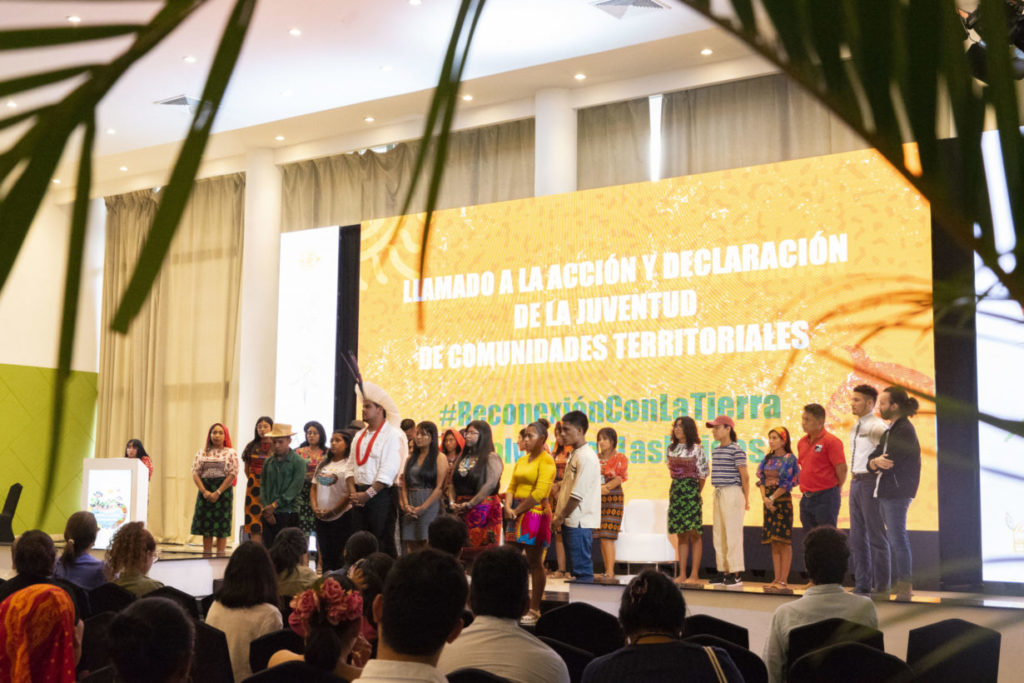
Además se destacó la relevancia del diálogo intergeneracional entre los conocedores mayores y los jóvenes en los esfuerzos por combatir el cambio climático en los territorios. La Escuela Mesoamericana de Liderazgo (EML), una de las unidades semiautónomas de la AMPB, fue reconocida como una expresión de la importancia de la preservación de la naturaleza para el logro de un desarrollo sostenible positivo para los PICLs. Y se enfatizó en que la creación de capacidades y la formación de jóvenes es una prioridad para nuestras y debe serlo para la cooperación.
In terms of capacity building and leadership building on climate change from the local-indigenous youth of Mesoamerica, the importance was emphasized of integrating young people in the formulation, negotiation and advocacy processes of community organizations.
"Many times the youth are there, but they are not listened to. We want firm spaces to work together," said Yanisbeth Gonzalez (MLE). Yanisbeth Gonzalez - of the MLE).
Regarding the role of indigenous and local community women as a source of traditional knowledge in agriculture and other practices that benefit climate change management, the need to position their particular agendas in the processes of dialogue, participation and negotiation was highlighted. Likewise, the importance of reviewing and influencing state policies to guarantee the effective participation of women in the development of their territories was highlighted.
"We are looking for women not to be left out of governance, we are looking for women to be protagonists. We are looking for women to be able to be part of the decision making process," explained Sara Omi- Coordinator of the Coordinating Committee of Women Territorial Leaders of Mesoamerica (CMLT).
In this regard, the importance of improving women's rights to property and secure land tenure, which has a very positive influence on empowerment, investment, natural resource management, and access to services and institutions, was emphasized.
On the topic of strengthening territorial governance as a solution to the growing citizen insecurity and non-compliance with the IPLCs, the need to develop and support participatory actions from the community worldview to mitigate the territorial impacts derived from disasters whose causes and responsibilities are, for the most part, outside the territories was discussed.
It is necessary to have a Regional Observatory on Violence and Criminalization of Leaders and build a model that supports the legal aspects, makes visible and addresses the impacts on the community and avoids re-victimization. In addition, it is transcendental to strengthen governance to reduce territorial insecurity, and to investigate the complex causes of violence.
"The struggle is won through the sustained and continued defense of our lands and territories, and the best way to do this is by strengthening territorial governments, and our traditional governance systems," shared at the climate justice conversation Christina Coc, who is part of the Maya Leaders of Southern Belize.
Throughout the event, a call was made to the media to work closely and with data to undermine the discourse that criminalizes territorial efforts. And to the organizations, research centers and donors that support PICL to continue efforts to achieve cooperative and inclusive approaches.
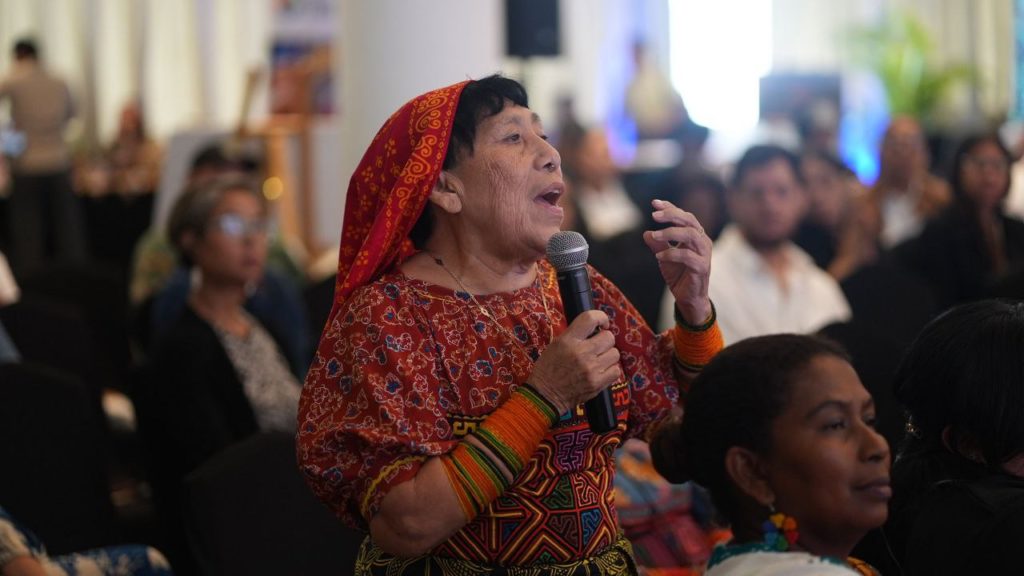
"If you, the big donors do not change your vision, we are not going to solve the problems. We live under the same roof, we eat at the same table, and when we go to the other world we go to the same land. unity, brotherhood, equality, to fight," he asked.I ask you for unity, brotherhood, equality, to fight," requested Briceida Iglesias of the Bundorgan Women's Network.
Este fue organizado por la AMPB con el apoyo de la Fundación Indígena FSC (FSC-IF) y la Alianza Global de Comunidades Territoriales (AGCT), Alianza Global de Pueblos Indígenas por los Derechos y el Desarrollo (IPARD), Rights and Resources Initiative (RRI), Love for Life, Wildlife Conservation Society (WCS), Green Climate Fund, Agroecology Fund, Cooperación Alemana al Desarrollo, GIZ, REGEN10, Trees, Water& People, Instituto de Liderazgo Simone de Beauvoir (ILSB), Asociación de Mujeres Artesanas Emberá y Eviromental Defense Fund.