The U.S. Department of State and the Global Alliance of Territorial Communities (AGCT) had a fruitful discussion on the inclusion of indigenous peoples and local communities in the climate finance and biodiversity protection mechanisms promoted by this country and agreed to continue the dialogue on mutual priorities.
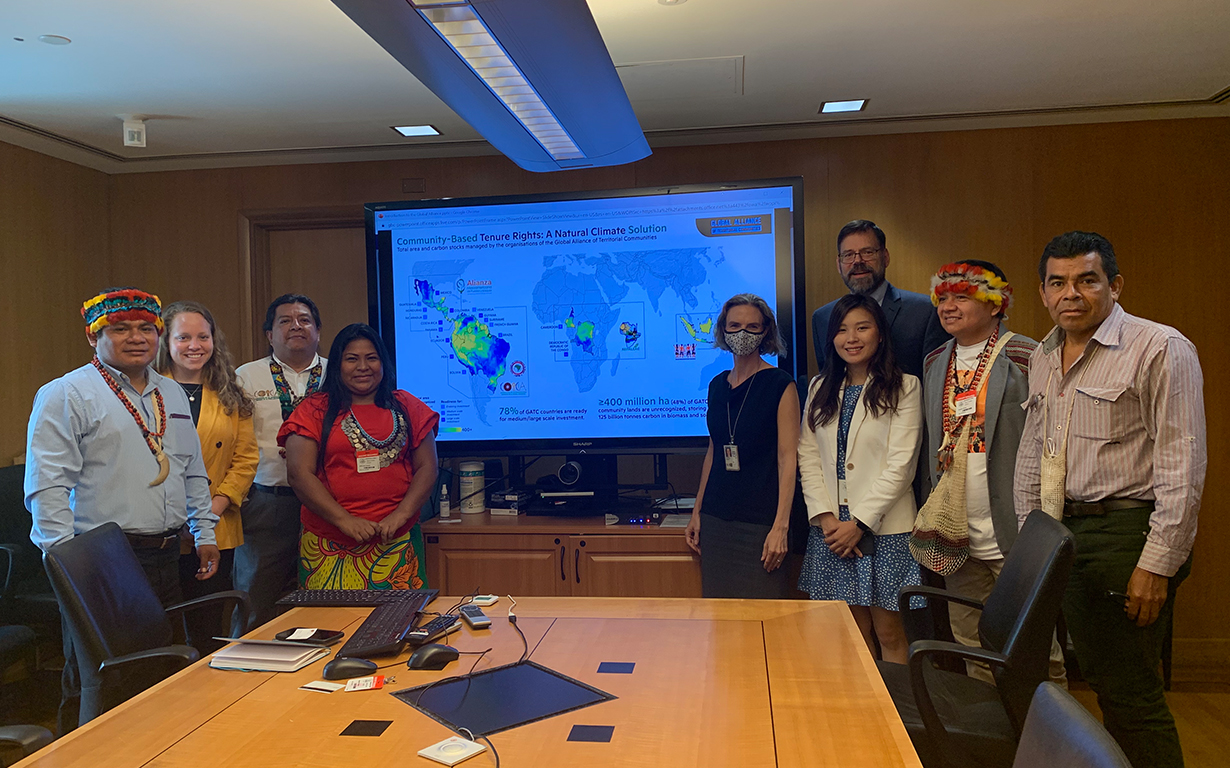
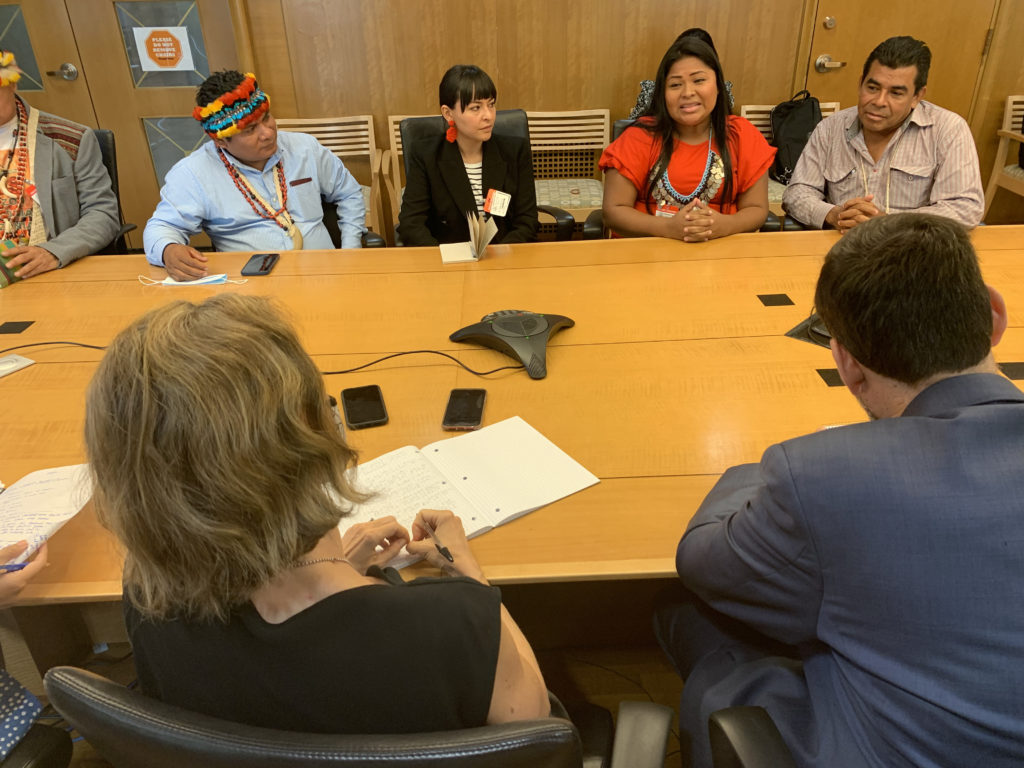
In a meeting with Jonathan Pershing, Senior Advisor to the Biden Administration's Special Envoy for Climate Change, on July 21, in Washington D.C. (USA), a delegation of territorial authorities positioned the need to include indigenous and local communities in the construction of climate funds such as LEAF and to generate communication channels that lead to a new relationship in which communities are partners, and not only beneficiaries.
The delegation also called on the Administration to adopt the concept of "Nature and Community-Based Solutions" as a logical framework that recognizes and promotes community participation in biodiversity conservation initiatives. In addition, it addressed the central role of indigenous and local women and youth in climate change resilience and adaptation.
"Without our peoples managing the forests, neither the United States nor the world will be able to reduce emissions by 45% by 2030. We are ready to move forward together for the good of humanity, and to shift to a model that respects our rights," said Tuntiak Katan, Shuar leader and Coordinator of the AGCT. Forests in indigenous and local territories contain 14% of the carbon in tropical forests worldwide.
As a result of the meeting, the AGCT and the State Department scheduled follow-up meetings, as well as a process to continue sharing information on the vision and demands presented by the leadership in ongoing mechanisms and the creation of new initiatives that include direct territorial funding; protection of leaders from criminalization and assassinations; territorial rights; Free Prior and Informed Consent; and respect for ancestral knowledge.
The Department of State leads U.S. foreign policy and commercial, social, and military relations with other governments through diplomacy, international assistance, and the promotion of the nation's interests to other governments.
About the mission
The Global Alliance of Territorial Communities is holding strategic meetings in Washington D.C. to learn about ongoing initiatives on climate change and biodiversity, as well as to present solutions from indigenous peoples and local communities in the world's tropical forests. The delegation is preparing the way towards the Conference of the Parties on Climate Change (COP 26 in Glasgow) and the World Conservation Congress.
La representación está compuesta por Tuntiak Katan, Coordinador de la AGCT; Gregorio Mirabal Coordinador General de la Coordinadora de las Organizaciones Indígenas de la Cuenca Amazónica (COICA); Levi Sucre, Coordinador de la Alianza Mesoamericana de Pueblos y Bosques (AMPB); Sara Omi, del espacio de coordinación de mujeres de la AGCT y Presidenta de la Coordinadora de Mujeres Líderes Territoriales de Mesoamérica; Juan Carlos Jintiach, Co Presidente del Caucus Indígena Global de Naciones Unidas, y Asesor técnico en políticas internacionales, cambio climático y biodiversidad de pueblos indígenas de la COICA.
About the Global Alliance of Territorial Communities
La Alianza Global de Comunidades Territoriales es una coalición de comunidades indígenas y locales de la Cuenca Amazónica, Brasil, Indonesia y Mesoamérica. Juntos representamos a 35 millones de pueblos forestales en 18 países, y de 800 millones de hectáreas de bosques. Cuatro organizaciones territoriales conforman nuestra alianza: La Coordinadora de Organizaciones Indígenas de la Cuenca Amazónica (COICA), la Articulación de los Pueblos Indígenas de Brasil (APIB), la Alianza Mesoamericana de Pueblos y Bosques (AMPB) y la Alianza de Pueblos Indígenas del Archipiélago (AMAN).